 English





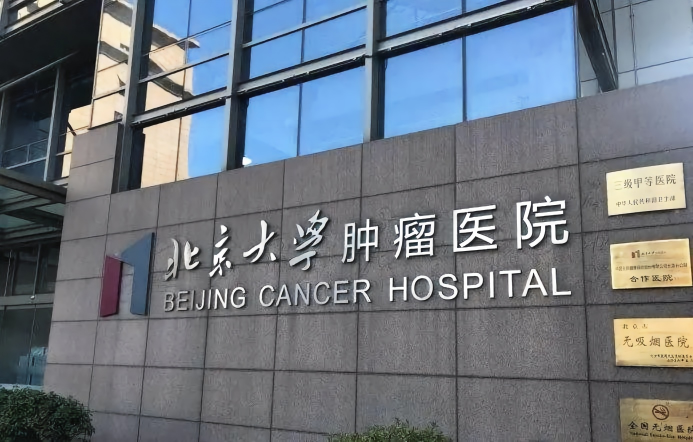
Peking University Cancer Hospital (Beijing Cancer Hospital, Beijing Institute for Cancer Research, Peking University School of Clinical Oncology) was founded in 1976. It is jointly managed by Peking University and the Beijing Municipal Health Commission, serving as a tertiary A-level specialized cancer hospital integrating medical care, education, research, and prevention. It is a research-oriented hospital that combines clinical practice with scientific research and is the only center responsible for cancer incidence registration and survival statistics in the Beijing region, providing data to the government and the World Health Organization. The hospital consistently adheres to the leadership of the Party and the strategy of "strengthening the hospital through talent." It currently has 2 academicians of the Chinese Academy of Engineering, 1 foreign academician of the National Academy of Medicine of the United States, 2 members of the Chinese Academy of Medical Sciences, 4 Changjiang Scholars, 2 Beijing Scholars, 2 Young Beijing Scholars, 12 recipients of the National Outstanding Youth Science Fund, 4 recipients of the National Excellent Youth Science Fund, and over 400 individuals selected for various talent programs at all levels. In line with the strategic deployment of the Healthy China initiative, the hospital has established two academician teams focusing on the Gastrointestinal Tumor Center and the Thoracic Tumor Center, continuously driving the high-quality development of oncology disciplines across the hospital. It provides "patient-centered" standardized comprehensive cancer treatment in areas such as gastric cancer, lung cancer, breast cancer, lymphoma, malignant melanoma, colorectal cancer, esophageal cancer, liver cancer, pancreatic cancer, urological tumors, gynecological tumors, head and neck tumors, and bone and soft tissue tumors, aiming to better serve patients. The hospital was among the first batch of hospitals designated by the National Health Commission as pilot units for multidisciplinary cancer diagnosis and treatment. The hospital remains committed to the fundamental task of fostering virtue through education, cultivating top-tier medical and health talents rooted in China. It has 9 academic doctoral programs, 5 professional doctoral programs, 7 teaching and research departments, 5 standardized residency training bases, 10 specialized training bases of Peking University Health Science Center, 101 doctoral supervisors, and 70 master's supervisors. It has trained over 1,500 master's and doctoral students and provided continuing education for more than 600 individuals. The hospital is a national standardized residency training base, a pilot unit for integrated training in medical oncology and surgical oncology in Beijing, and a specialized physician training base of Peking University Health Science Center. The hospital was developed on the foundation of the Beijing Institute for Cancer Research. In December 1975, Zhu De, Chairman of the Standing Committee of the National People's Congress, personally inscribed the name of the institute. The institute has maintained continuous innovation and leadership in basic cancer research, diagnosis and treatment, and field intervention, with two high-incidence field sites for gastric cancer and esophageal cancer. It has established a comprehensive and systematic structure, including 11 basic research laboratories and 4 platform departments, with over 120 highly qualified full-time scientific research technicians. The institute focuses on digestive system tumors, lung cancer, breast cancer, lymphoma, and malignant melanoma, with research priorities in etiology prevention, pathogenesis, diagnostic and therapeutic targets, and clinical translation. The hospital consistently emphasizes self-reliance and self-strengthening in science and technology. It has undertaken over 860 national-level projects from the Ministry of Science and Technology and the National Natural Science Foundation of China, as well as over 550 provincial and ministerial-level projects. It has won more than 240 awards at or above the provincial and ministerial level and obtained nearly 500 national patents. The hospital has signed nearly 30 technology transfer contracts, with a total contract value exceeding 225 million RMB. It has published nearly 9,000 papers in domestic and international biomedical journals, including 4,100 SCI papers. In recent years, many of the hospital's research findings have been published in internationally renowned oncology journals such as NEJM, BMJ, Lancet, JAMA, Science, Nature, Cell, Lancet Oncology, Nature Medicine, Cancer Cell, Annals of Oncology, and Journal of Clinical Oncology, receiving high international acclaim. The hospital has a national key discipline in oncology and is a unit of the national "Double First-Class" construction discipline for clinical medicine and basic medicine at Peking University. It has two national key clinical specialties in oncology and pathology, as well as a Beijing municipal key clinical specialty in medical oncology. The hospital is home to the National Key Laboratory for Integrated Prevention and Treatment of Digestive System Tumors, the National Key Laboratory of Molecular Oncology, the Key Laboratory of Carcinogenesis and Translational Research (Ministry of Education), the Frontier Science Center for Cancer Integrative Omics (Ministry of Education), the Beijing Key Laboratory of "Solid Tumor Cell and Gene Therapy," the Beijing Key Laboratory of "Radiopharmaceutical Research and Experimental Evaluation," the Beijing Engineering Research Center for Antitumor New Drugs and Technologies, the Nuclear Technology (Radiopharmaceutical R&D and Clinical Application) R&D Center of the China Atomic Energy Authority, the Third-Level Laboratory of the National Administration of Traditional Chinese Medicine for Traditional Chinese Medicine Pharmacology (Tumor), the Beijing International Science and Technology Cooperation Base for "Digestive System Tumors," the first batch of demonstration research wards in Beijing, and the construction unit of the Ministry of Science and Technology's Information Platform for Efficacy and Safety Evaluation of Antitumor New Drugs. It is also one of the first national pilot units for clinical application of high-throughput gene sequencing technology in tumor diagnosis and treatment, and two specialties (medical oncology and AI-assisted treatment technology/medical surgical robots) have been approved as the first batch of demonstration and promotion centers for innovative drugs and devices in Beijing. The hospital serves as the supporting and affiliated unit of the Beijing Anti-Cancer Association and the Beijing Cancer Rehabilitation Association. Marking a glorious journey of five decades, the hospital embarks on a new chapter. Standing at a new historical starting point, Peking University Cancer Hospital will continue to be guided by Xi Jinping Thought on Socialism with Chinese Characteristics for a New Era, firmly uphold the public welfare nature of public hospitals, and strive tirelessly to become a globally recognized international cancer group center of choice for patients, contributing significantly to the Healthy China initiative and the well-being of the people.