Department Details
The Department of Cardiology at Shanghai Children's Medical Center was established in 1974, making it one of the early tertiary pediatric disciplines in China. In April 1999, it was relocated entirely from Xinhua Hospital to Shanghai Children's Medical Center. After nearly 50 years of arduous efforts, the Department of Cardiology has developed into a leading domestic center for the diagnosis and treatment of pediatric heart diseases, integrating medical care, education, and research. It is the only children's hospital designated by the Ministry of Health with training qualifications for interventional treatment of congenital heart disease and a designated hospital for new rural cooperative medical care for congenital heart disease. It is also a key discipline under the National 211 Project and a major component of the key discipline of pediatrics under the National Education Commission and the Municipal Education Commission. In 2001, it became one of the first batch of clinical medical centers approved by Shanghai.
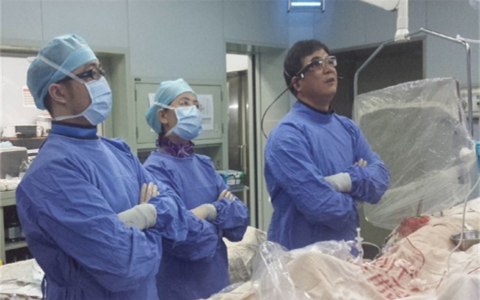
The Pediatric Cardiology Department comprises inpatient wards, outpatient clinics, a cardiac catheterization lab, an echocardiography lab, an electrocardiography lab, a cardiac function lab, and a cardiovascular research lab. The inpatient wards have over 60 beds, including 8 intensive care beds. It is equipped with the world's most advanced cardiovascular angiography equipment, MRI, high-resolution CT, echocardiography devices (including transesophageal and three-dimensional echocardiography), and electrophysiological recording systems. Comprehensive cardiac electrophysiological function tests are available, including Holter monitoring, treadmill exercise testing, transesophageal pacing, and tilt table testing. Currently, the annual outpatient and emergency visits exceed 18,000, inpatient admissions surpass 2,000, and over 60,000 echocardiographic diagnoses are performed annually. Approximately 1,800 cardiac catheterization procedures are conducted each year, with nearly 90% being interventional treatments, ranking first among children's hospitals in China. The echocardiographic diagnosis, cardiac catheterization, and treatment of congenital heart disease lead domestically in terms of volume, diagnostic accuracy, and interventional success rates, reaching internationally advanced levels. The introduction and application of new technologies, such as transvenous endocardial pacemaker implantation for bradyarrhythmias and radiofrequency ablation for tachyarrhythmias, have continuously improved the diagnosis and treatment of pediatric arrhythmias. In recent years, the department has actively advanced precision diagnosis and treatment for rare diseases such as pediatric cardiomyopathy and pulmonary hypertension, treating a leading number and variety of rare cardiovascular diseases in children domestically.
The Department of Cardiology currently has 21 physicians, with 85.7% holding postgraduate degrees, including 10 with doctoral degrees, 8 with master's degrees, 11 chief or associate chief physicians (professors or associate professors), 4 doctoral supervisors, and 3 master's supervisors. It has established a systematic disciplinary structure and a well-organized academic team, earning a strong reputation in domestic and international pediatric circles. In addition to graduate education, the department trains 10 to 20 visiting physicians annually and hosts two national continuing medical education programs: "Noninvasive Diagnosis of Pediatric Congenital Heart Disease" and "Advances in Diagnosis and Treatment of Pediatric Cardiovascular Diseases," significantly enhancing the diagnostic and treatment capabilities for pediatric cardiovascular diseases nationwide.
In recent years, the Department of Cardiology has undertaken over 20 research projects with total funding exceeding 6 million RMB, including 6 projects funded by the National Natural Science Foundation, 1 project under the National Ministry of Science and Technology's Tenth Five-Year Plan, 1 sub-project of the 973 Program, 2 projects under the 863 Program, and 2 major projects from the Municipal Science and Technology Commission. Seventeen projects have been completed and passed acceptance or evaluation, with achievements such as methodological studies on echocardiographic diagnosis of congenital heart disease, experimental and clinical research on three-dimensional echocardiography, experimental and clinical studies on interventional treatment of congenital heart disease, and research on the pathogenesis of pulmonary hypertension and noninvasive and invasive assessment of clinical pulmonary hypertension, reaching domestic leading and partially internationally advanced levels. The department has received multiple national, provincial, and municipal second and third prizes for scientific and technological progress, the Third Prize of the Chinese Medical Science Award, and the Soong Ching Ling Pediatric Medicine Award.
Alongside clinical and research advancements, the department places great emphasis on strengthening domestic and international academic exchanges, maintaining long-term connections and collaborations with the world's most renowned congenital heart disease diagnosis and treatment centers, such as Boston Children's Hospital (affiliated with Harvard University), Nationwide Children's Hospital (Columbus), Cincinnati Children's Hospital, The Hospital for Sick Children (Toronto), and Great Ormond Street Hospital for Children (London).
**Specialized Techniques of the Department**
1. Interventional treatment of pediatric congenital heart disease (including hybrid surgical and interventional approaches)
2. Radiofrequency ablation for pediatric tachyarrhythmias
3. Cardiac pacing for bradyarrhythmias in infants and children
4. Echocardiographic diagnosis of congenital heart disease (including three-dimensional echocardiography, transesophageal echocardiography, and fetal echocardiography)
5. Diagnosis and treatment of pediatric pulmonary hypertension
6. Diagnosis and treatment of pediatric cardiomyopathy
7. Diagnosis and treatment of rare pediatric cardiovascular diseases
8. Diagnosis and treatment of Kawasaki disease
9. Diagnosis and treatment of pediatric infective endocarditis

 English