Department Details
The Department of Hepatobiliary Surgery at the First Affiliated Hospital of Guangzhou Medical University was established as an independent department in April 2006, following its separation from General Surgery. Under the leadership of Professors Liu Yanmin, Li Jun, and Liu Anzhong, and through the arduous efforts and diligent work of several generations, the department's medical care, teaching, research, and nursing have consistently been at an advanced level in Guangdong Province. It has now developed into a clinical department integrating medical care, education, research, prevention, and management, with extensive academic influence in South China and across the country. The department also places great emphasis on science education and social service, introducing and promoting early prevention and treatment of liver cancer and comprehensive management of hepatolithiasis to the general public and social media. It actively advances day surgery and Enhanced Recovery After Surgery (ERAS) to effectively reduce medical costs, improve patient experience, and enhance the quality of medical services.
In recent years, the Department of Hepatobiliary Surgery has closely adhered to the requirements of the times, solidly promoted discipline construction, seized opportunities, kept pace with the times, and achieved coordinated development. Focusing on core technologies of hepatobiliary, pancreatic, and splenic surgery, it has made a series of breakthroughs in minimally invasive surgery, liver transplantation, precision medicine, and whole-course management. In 2020, it became one of the seven lead units for Human Organ Procurement Organizations in Guangdong Province.
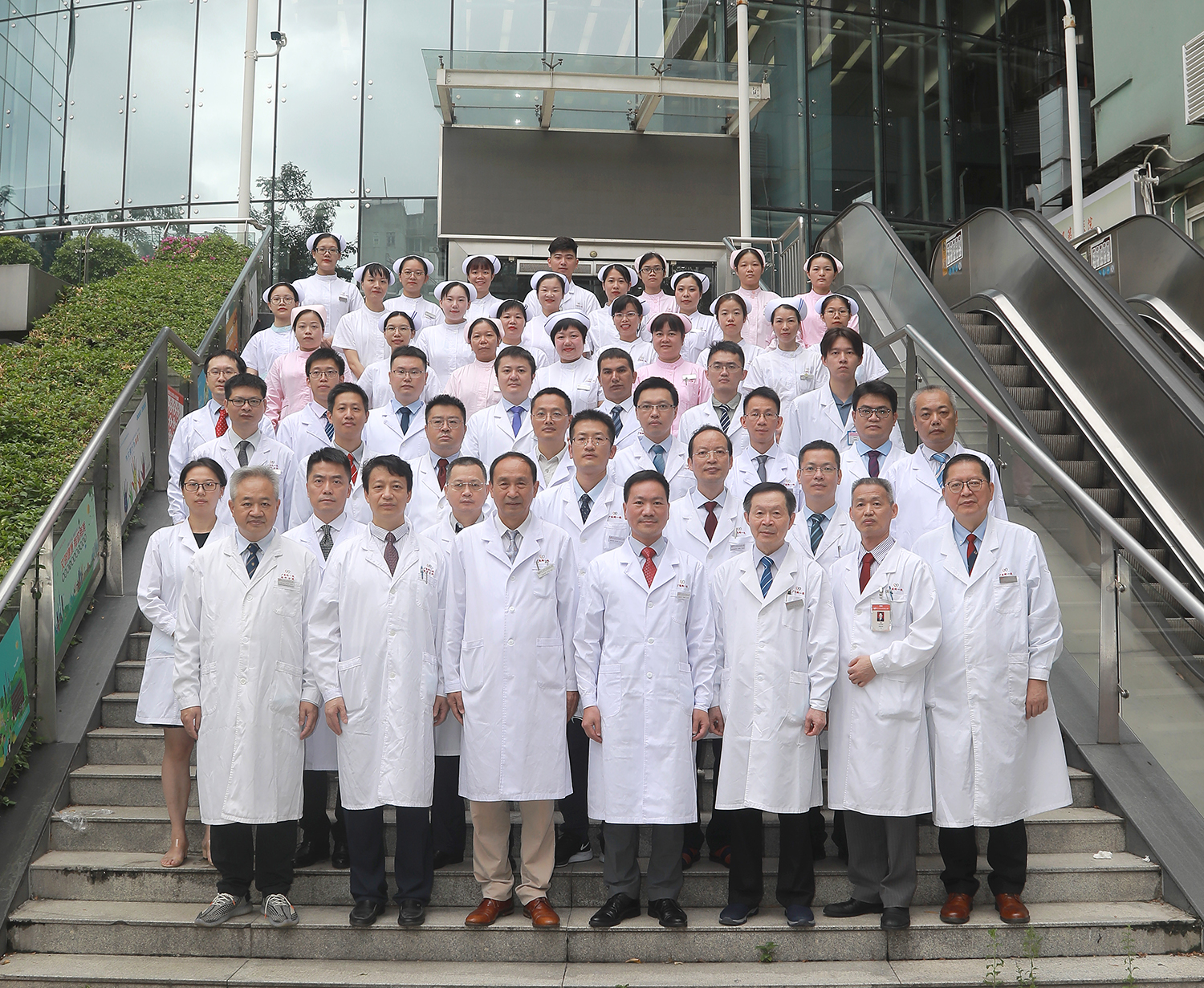
The Department of Hepatobiliary Surgery currently has two wards (Yanjiang Campus and Haiyin Campus), with 93 open beds. The discipline has a well-structured talent echelon and strong technical capabilities. It currently has 27 physicians, including 10 with senior titles (professor level), 9 with associate senior titles, 8 attending physicians and residents, 1 expert receiving the State Council Special Allowance, 1 second-level professor, 2 deputy chairpersons of national academic groups, and 1 chairperson and 4 deputy chairpersons of provincial and municipal academic groups. The current department director is Professor Wang Guoying (introduced as a talent in May 2021).
The Department of Hepatobiliary Surgery has gradually developed professional characteristics and advantages represented by biliary minimally invasive surgery, comprehensive treatment of liver cancer, and liver transplantation. It has distinct technical features and professional strengths in percutaneous transhepatic rigid choledochoscopy, multidisciplinary comprehensive treatment and whole-course management of liver cancer, and comprehensive prevention and treatment of recurrence after liver transplantation for liver cancer. The department offers a full range of liver cancer treatments, including hepatectomy, liver transplantation, local ablation, interventional therapy, radiotherapy, targeted therapy, and immunotherapy. Rigid choledochoscopy technology is at a nationally advanced level. Based on percutaneous transhepatic choledochoscopy (PTCS), combined with flexible/rigid choledochoscopy and laparoscopy, the department treats extensive intrahepatic and extrahepatic bile duct stones, refractory biliary strictures after liver transplantation, and biliary-enteric anastomotic strictures, achieving favorable outcomes and exerting clinical influence nationwide.
In terms of research and teaching, the Department of Hepatobiliary Surgery places great importance on the comprehensive development of "medical care, education, and research." It has long undertaken teaching tasks at four levels: master's students, undergraduates, junior college students, and visiting physicians, achieving excellent results. Several physicians have been honored with the title of "Excellent Clinical Skills Training Instructor." As supervising instructors, they guided students to win the first prize in the national finals of the 6th National Clinical Skills Competition for Medical College Students in 2015, and the first prize in the 3rd South China Regional Competition and third prize in the national finals in 2012. Members of the discipline have co-authored 6 monographs and undergraduate planning textbooks, co-edited 3 national industry guidelines and consensus documents, led over 20 projects funded by the National Natural Science Foundation of China and provincial/municipal research programs, obtained 8 national invention patents and utility model patents, and published over 50 papers in English-language journals such as Ebiomedicine, Frontiers in Oncology, and Journal of Cancer, as well as over 120 papers in Chinese-language journals.
Department Honors:
1. First batch of Endoscopic Diagnosis and Treatment Technology Training Bases (General Surgery) designated by the Ministry of Health.
2. Clinical Application Training Center for Rigid Choledochoscopy (first in China).
3. Member Unit of the China Liver Cancer Portal Vein Tumor Thrombus Alliance.
4. Lead Unit of the Hepatolithiasis Minimally Invasive Treatment Research Group under the Hepatobiliary and Pancreatic Surgery Committee of the Chinese Research Hospital Association.
5. Workstation of Academician Dong Jiahong's Team.
6. Unit of Guangzhou Clinical Characteristic Technology Project (Ultrasound Fusion Navigation Combined with Rigid Choledochoscopy for Hepatolithiasis).
7. Guangdong Provincial Training Base for Hepatology Nurse Specialists.
8. Guangzhou Excellent Nursing Collective.
9. Hospital Excellent Ward for Safety Goal Implementation.
10. Hospital Excellent Nursing Collective.

 English