Department Details
The Gastroenterology Group of the Department of Internal Medicine at Southern Medical University (formerly the First Military Medical University) was established in the 1950s, with the formal establishment of a specialized gastroenterology department in 1978. Under the guidance and leadership of the discipline's founder, Professor Zhou Dianyuan, the rigid endoscope was first introduced in China in 1955, and fiberoptic colonoscopy was pioneered in 1973. In 1979, it was approved as a master's degree authorization point, and in 1986, it became the first doctoral degree authorization point at the First Military Medical University. In 1995, with approval from the Central Military Commission, the PLA Institute of Gastroenterology was established, and the same year saw the approval for recruiting postdoctoral researchers. In 2001, it was recognized as one of the first national key disciplines by the Ministry of Education. In 2010, it was rated as one of the first national key clinical specialties by the Ministry of Health. In 2014, the Southern Institute of Gastroenterology was approved for establishment. In 2015, it was selected as a key construction discipline for high-level universities in Guangdong Province. Today, it has become a leading discipline and a key base for medical care, teaching, and research with widespread influence in the field of gastroenterology in Guangdong Province and across the country.
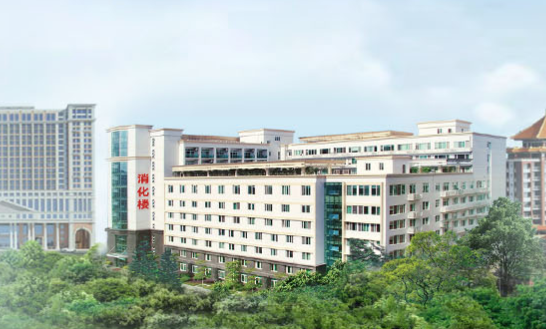
As a leading and distinctive discipline in South China and nationwide, the Department of Gastroenterology at Nanfang Hospital is now composed of the Clinical Division, Endoscopy Center, Experimental Research Center, the Editorial Office of *Modern Digestion & Interventional Diagnosis and Treatment*, and the Guangdong Provincial Society of Hepatology, forming a comprehensive disciplinary system integrating clinical practice, research, and teaching. The Clinical Division, as a professional unit of the National Drug Clinical Research Base, handles nearly 300,000 outpatient visits annually, operates 140 beds, and admits nearly 10,000 patients per year. The Digestive Endoscopy Center, a national training base for endoscopists, covers an area of 1,000 square meters and performs over 200,000 endoscopic diagnostic and therapeutic procedures annually. The Experimental Research Center, designated as the Guangdong Provincial Key Laboratory of Gastrointestinal Diseases, spans 2,500 square meters and is equipped with advanced instruments to support various experimental needs, including molecular biology, immunology, cytology, pathology, and experimental animal studies. In recent years, a number of provincial-level innovation platforms have been added. In 2015, it became the Guangdong Provincial Biomedical Engineering Technology Research Center for Gastrointestinal Diseases. In 2017, it was designated the Guangdong Provincial Medical Endoscopy Engineering Technology Research Center. In 2018, it joined the National and Local Joint Engineering Research Center for Microsystem Medical Devices, served as the Southern Clinical Research Center, and established the National Capsule Endoscopy Research Center. In 2018, it received approval for the Guangdong Provincial Biomedical Translational Platform and the Guangdong Provincial Translational Medicine Innovation Platform for Digestive Diseases. The academic journal *Modern Digestion & Interventional Diagnosis and Treatment*, sponsored by the department, has been included as a source journal for the China Scientific and Technical Papers and Citations Database (CSTPCD, a core Chinese scientific journal) and has twice received the Guangdong Provincial Excellent Journal Award. Recent honors include: consistently ranking in the top ten across three major authoritative rankings (9th nationally in the Chinese Hospital Specialty Reputation Ranking, 7th nationally in the Chinese Academy of Medical Sciences Science and Technology Value Ranking, and first nationally for four consecutive years in the National Hospital Internet Influence Ranking), being named the 21st Guangdong Provincial "Provincial Youth Civilization Unit," and receiving the collective honor of the "Guangdong Youth May Fourth Medal."
The department currently has 208 medical, nursing, and technical staff, including 73 physicians. Among the physicians, 18 hold senior professional titles (professor level), 23 hold associate senior professional titles, and 69 hold doctoral degrees. The department boasts a high-level talent pool, including one national candidate of the "New Century Hundred, Thousand, and Ten Thousand Talents Project," four experts receiving the State Council Special Government Allowance, three young and middle-aged experts with outstanding contributions to national health, one recipient of the National Outstanding Youth Science Fund, two Pearl River Scholars, two Guangdong Provincial Medical Leading Talents, and two Guangdong Provincial Outstanding Young Medical Talents.
The department has strong research capabilities and outstanding achievements in talent cultivation. It currently has 7 doctoral supervisors, 17 master's supervisors, and 3 full-time researchers. As of 2024, the institute has trained 486 master's students (95 currently enrolled), 350 doctoral students (51 currently enrolled), and 30 postdoctoral fellows (19 completed, 11 currently enrolled). Many of the graduated students have become renowned experts in China. The department maintains stable research directions, all at the leading level in China. Since 2000, it has undertaken 3 National 863 Program projects, 76 National Natural Science Foundation projects, 1 National Key Teacher Fund project, and 127 provincial and ministerial-level fund projects (including key research projects), with total research funding exceeding 130 million RMB. It has published 438 SCI papers. As the primary completing unit, it has won 2 National Science and Technology Progress Second Prizes, 6 Guangdong Provincial Science and Technology Progress First Prizes, 13 military and provincial/ministerial-level second prizes, and has edited and published over 40 monographs.

 English