Department Details
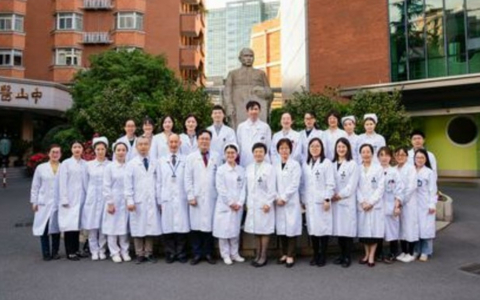
The Department of Integrative Medicine at Shanghai Pulmonary Hospital is a key clinical specialty under cultivation in Shanghai for integrative Chinese and Western medicine, as well as a developing discipline within the hospital. It has 44 approved beds, with 1 chief physician, 3 deputy chief physicians, and 4 attending physicians, including 4 medical doctors and 3 masters.
The department has accumulated extensive experience in the integrative diagnosis and treatment of lung cancer, chronic airway diseases (COPD, asthma, interstitial lung disease), multidrug-resistant tuberculosis, and NTM lung disease. It currently serves as a training unit for graduate students at Tongji University School of Medicine and Shanghai University of Traditional Chinese Medicine, and is a national and Shanghai-level continuing education base for Chinese medicine training.
Lung cancer is one of the department's predominant diseases, and a multidisciplinary comprehensive treatment plan based on precision therapy for lung cancer has been established, integrating Chinese and Western medicine (including surgery, chemotherapy, radiotherapy, targeted therapy, and immunotherapy, with Chinese medicine treatment integrated throughout the entire course). The use of Chinese medicine to strengthen the body and fight cancer in treating lung tumors is a specialty of the department: early intervention with Chinese medicine after lung cancer surgery to promote recovery; phased treatment to prevent recurrence and metastasis; sequential treatment combining Chinese medicine with chemoradiotherapy to reduce toxicity and enhance efficacy; and Chinese medicine combined with targeted therapy to reduce side effects. The entire process employs integrative Chinese and Western medicine diagnostic and treatment methods to improve outcomes such as survival and quality of life for lung cancer patients.
The department offers various specialized Chinese medicine diagnostic and treatment services: acupoint application and acupoint injection for chronic respiratory diseases; external application of Chinese herbs for constipation after chemotherapy; moxibustion on the governor vessel combined with Chinese medicine to alleviate chemotherapy side effects; auricular acupressure to improve sleep; acupuncture for pain relief and press needles to reduce cancer-related pain; acupuncture anesthesia applied in bronchoscopy and microwave ablation; acupoint injection to prevent bone marrow suppression after chemotherapy, improve cancer-related fatigue, and regulate immune function; and Chinese medicine iontophoresis to improve gastrointestinal side effects during chemotherapy.
Physicians in the department have visited renowned institutions such as Mount Sinai Hospital in the United States and the University of California for academic exchanges. They have received support from research projects and talent programs, including the National Natural Science Foundation of China, the Shanghai Three-Year Action Plan, the Shanghai Magnolia Talent Fund, and the Shanghai Municipal Health Commission's Xinglin Rising Star program. The department leads three national GCP clinical trials and serves as a GCP clinical base for drug development, having completed six GCP clinical studies.
The academic leader and key members have recently presided over 3 projects funded by the National Natural Science Foundation of China, over 10 projects by the Shanghai Municipal Science and Technology Commission, 1 clinical innovation project by the Shenkang Center, 1 major project under the Shanghai Three-Year Action Plan, and 1 cultivation project for Shanghai key clinical specialties in Chinese medicine. They have published over 30 papers in SCI and core journals and hold various academic positions, including standing council members and committee members of national societies, vice chairs and committee members of Shanghai-level societies, reviewers for the National Natural Science Foundation of China, and reviewers for the Shanghai Municipal Science and Technology Commission.

 English