Department Details
### Basic Information of the Department
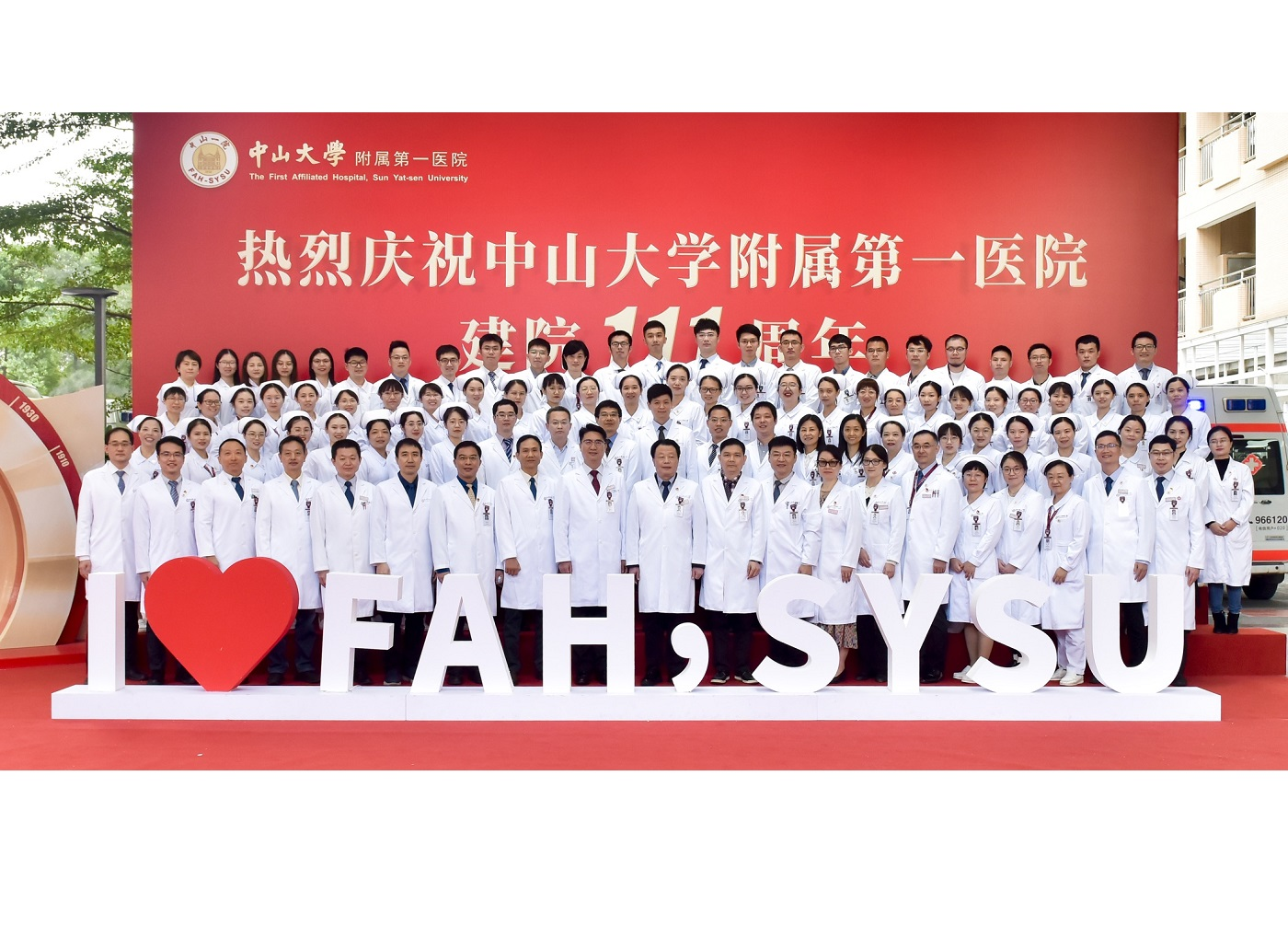
The First Affiliated Hospital of Sun Yat-sen University (formerly the First Affiliated Hospital of Sun Yat-sen University of Medical Sciences, abbreviated as FAH-SYSU) is one of the most renowned large-scale general hospitals directly under the Ministry of Health in China. As early as 1972, Professor Mei Hua from our hospital led and successfully performed the first kidney transplant in Chinese history, making FAH-SYSU one of the earliest hospitals in China to conduct organ transplantation. Professor Huang Jiefu successfully performed China's first liver transplant with extracorporeal venovenous bypass in 1993, becoming the initiator and promoter of the second wave of liver transplantation in China. In 1996, Professors Huang Jiefu and Zheng Keli established the Organ Transplant Department at FAH-SYSU, making it one of the earliest independently established organ transplant centers in China. That same year, they jointly performed Asia's first combined liver-kidney transplant, which garnered national attention. Also in 1996, our hospital performed China's first infant heart transplant. Over thirty hospitals nationwide sent technical骨干 to FAH-SYSU to observe and learn organ transplant techniques, establishing FAH-SYSU as one of the primary birthplaces of clinical solid organ transplantation in China. Professor Huang Jiefu, Honorary Director of the Organ Transplant Department, is the leader of China's transplant work, Chairman of the China Human Organ Donation Committee, and Honorary Chairman of the Chinese Society of Organ Transplantation. Professor Zheng Keli previously served as Vice Chairman of the Chinese Society of Organ Transplantation and Deputy Head of the Kidney Transplantation Group.
### Clinical Work
Over the past decade, guided by discipline construction and driven by innovation, the Organ Transplant Center of FAH-SYSU, led by Professor He Xiaoshun, has pioneered a series of internationally advanced transplant techniques. In 2004, they successfully performed Asia's first multi-organ transplant, which was listed as one of the Ministry of Health's "Top Ten Medical Science and Technology News in China." They performed China's first liver transplant with portocaval anastomosis, breaking the contraindication of extensive portal vein system disease for liver transplantation. They were the first in China to perform liver transplantation combined with radical tumor resection for treating gastrointestinal tumors with liver metastases, and the first to perform liver transplantation combined with pancreaticoduodenectomy for treating hepatobiliary malignancies. They performed a liver transplant on the youngest patient in China (3 months old). In 2005, they performed China's first autologous liver transplant and China's first liver transplant from a citizen donor. Breaking age barriers, they successfully performed a liver transplant on the oldest patient in Asia (76 years old). They also performed China's first living-related small bowel transplant from a mother donor. In 2006, they performed the first adult living-donor liver transplant using an extended right lobe graft in South China and China's first living-donor single liver segment transplant. In 2007, they performed the first split-liver transplant in South China. They successfully performed two cases of combined heart-lung transplantation in the youngest patients in China, both achieving long-term survival, with one patient having the longest survival and best quality of life in China. In 2008, they successfully performed China's first multi-organ transplant preserving the native pancreas for treating insulin-dependent diabetes mellitus combined with end-stage liver disease. In 2009, they performed the first living-related dual-lobe donor liver transplant in South China and the first split-liver transplant for two adult recipients in South China. In 2010, they performed adult organ transplantation from the youngest brain-dead donor in China (6 years old) and the first deceased donor small bowel transplant in South China. In 2011, they internationally pioneered the "two livers for three recipients" liver transplant procedure, actively addressing the donor shortage. In 2012, they performed adult organ transplantation from the youngest brain-dead donor in China (3 years old) and successfully performed China's first in-situ split-liver transplant from a donation after circulatory death (DCD) donor.
In 1972, Professor Mei Hua from our hospital led and successfully performed the first kidney transplant in Chinese history. Over the past 40+ years, the number of kidney transplant procedures and clinical outcomes have steadily increased and improved. As of December 2012, over 3,600 kidney transplants have been performed, with 1-year and 3-year patient survival rates exceeding 95% and 90%, respectively. The number of long-term survivors exceeding 10 years post-transplant has significantly increased. The clinical scale and efficacy of kidney transplantation have consistently ranked among the top in China. It was approved as a national-level kidney transplant technology training base by the Ministry of Health in 2006. The youngest kidney transplant recipient was 3 years old, and the oldest was 84 years old, both achieving good outcomes. Extensive successful experience has been accumulated in the surgery and perioperative management of second and subsequent kidney transplants. The number and outcomes of pediatric kidney transplants are among the best in China. As of December 2012, 76 pediatric kidney transplants had been performed, making our hospital one of the hospitals with the highest number and best outcomes for kidney transplantation in young children. We successfully performed the youngest pediatric deceased donor kidney transplant and the youngest low-weight living-related pediatric kidney transplant in China, and set a record of performing 5 pediatric kidney transplants within 8 days. As the leading unit in South China, we successfully completed China's first kidney transplant from a donation after circulatory death (DCD) donor in 2007. In the past three years, we have completed over 120 DCD donor kidney transplants, making us the earliest and highest-volume unit for DCD kidney transplantation in China. We were also among the first units in China to use LifePort to improve the quality of DCD donor organs. We successfully performed the first DCD pediatric dual kidney transplant to an adult recipient in South China (youngest donor at 7 months), with all 5 cases successful, accumulating valuable experience. As of 2012, over 20 pediatric DCD donor kidney transplants had been performed, making us one of the units with the highest number and best outcomes for this type of surgery in China. Patients with donor-specific antibodies (DSA) were once considered a contraindication for transplantation. We successfully performed living-related kidney transplants in 2 such patients after appropriate management, achieving ideal results and generating significant impact in the domestic academic community.
Our unit is one of the few in China and the only one in Guangdong Province approved by the state to conduct clinical trials for immunosuppressive drugs related to organ transplantation. We translate pharmacokinetic and pharmacogenomic research findings into clinical practice to optimize individualized treatment for kidney transplant recipients. This includes detecting CYP3A4 and CYP3A5 genotypes and/or combining pharmacokinetic interventions to optimize the use of cyclosporine A and tacrolimus. We were among the first in China to guide rational drug use through multi-point monitoring of blood concentrations of MMF, mizoribine, etc.
The development of organ transplantation is inseparable from the innovation and application of experimental techniques. Our unit pioneered the detection of panel reactive antibodies (PRA) in 1991, initiated large-scale HLA typing in 1994, and created the donor kidney ex vivo perfusion test in 1995. The Organ Transplant Laboratory was established in 1996, making it one of the earliest specialized organ transplant laboratories in China. This laboratory has always been the affiliated laboratory of the Guangdong Provincial Organ Transplant Research Center and is one of the most important organ transplant laboratories in South China. We were the first in China to establish detection techniques for BK virus, human parvovirus B19, and other pathogens after kidney transplantation. New-generation Luminex liquid chip technology for screening anti-HLA antibodies, identifying positive antibody specificities, and detecting donor-specific antibodies is also operational. Furthermore, our unit was the first in China to use low-dose multi-slice spiral CT scanning to quantitatively assess single kidney function in living-related kidney donors. We were also among the first in China to perform C4d immunohistochemical staining of transplant kidney biopsies to definitively diagnose antibody-mediated rejection after kidney transplantation.
It is worth mentioning that our center has established a diagnostic routine for regular monitoring of BKV replication after kidney transplantation (including urine sediment cytology, BKV-DNA load monitoring, pathological diagnosis, and ultrastructural observation of tissue cells) to screen high-risk populations for BKV infection. We use preemptive intervention to treat BKV infection in kidney transplant recipients to prevent BKV-associated nephropathy (BKVAN). For patients with BKVAN, we adopt a strategy of reducing immunosuppression intensity to prolong transplant kidney survival. The research findings have been affirmed by many domestic kidney transplant experts and have drawn attention to BKV infection in kidney transplant recipients across multiple transplant centers nationwide. We also periodically undertake the diagnosis and assist in the treatment of this disease, primarily in the Guangdong region.
### Scientific Research
Awards received by the FAH-SYSU Organ Transplant Team in recent years include:
* 1998: "Clinical and Experimental Study of Orthotopic Liver Transplantation for End-Stage Liver Disease" – First Prize for Scientific and Technological Progress, Guangdong Provincial Science and Technology Commission.
* 2003: "Series Studies on Orthotopic Liver Transplantation" – First Prize for Scientific and Technological Progress, Guangdong Province.
* "Series Studies on Further Improving Long-Term Outcomes of Kidney Transplantation" – Second Prize for Scientific and Technological Progress, Ministry of Education.
* "Series Studies on Cytomegalovirus Infection after Kidney Transplantation" – Second Prize for Scientific and Technological Progress, Guangdong Province.
* 2004: "Series Studies on Orthotopic Liver Transplantation" – Second

 English