 English




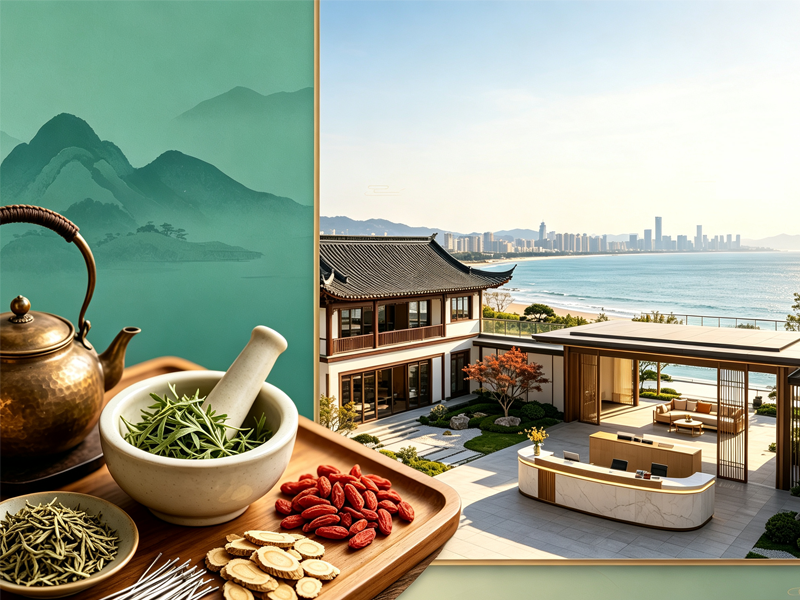
TCM wellness drives inbound health tourism, Dovecure escorts global patients for premium care in China.
"TCM + Cultural Tourism" Unlocks New Scenarios for Inbound Consumption, China's Medical Wellness Experience Welcomes Global Visitors
In September 2025, nine government departments including the Ministry of Commerce jointly issued the Several Policy Measures on Expanding Service Consumption, which proposes to leverage the advantages of traditional cultural resources such as Traditional Chinese Medicine (TCM) to launch distinctive tourist routes suitable for foreign visitors. Since the implementation of the policy, TCM medical institutions, TCM museums and wellness venues in Hainan, Sichuan, Guangdong and other regions have quietly become new consumption scenarios for inbound tourists.
In the TCM herbal exhibition area of the Sichuan Provincial Museum of Traditional Chinese Medicine, more than 50,000 bottles of characteristic medicinal materials and precious specimens from all over the country are on display. As one of the featured overseas tourist routes, it brings a unique cultural experience to global visitors. Along the coastline of Sanya Yalong Bay Tourist Resort, tourists from Russia, Germany, France and other countries are experiencing the distinctive "tourism + wellness" products jointly launched by hotels and TCM clinics. At Hu Qing Yu Tang Chinese Pharmacy in Hangzhou, visitors from Bulgaria can personally learn to make herbal sachets, and get to know the names and effects of more than ten aromatic medicinal materials such as clove, mugwort and peppermint under the guidance of pharmacists.
The booming integration trend of "TCM + cultural tourism" allows more international friends to feel the unique charm of traditional medicine during their journeys across China. At the same time, the hard-core strength of China's modern medical technologies is becoming another core driving force attracting global patients to travel across oceans for medical treatment.
Cutting-Edge Technologies: The Solid Backing of China's Medical Sector
According to the report from the National Health Commission, the number of international patients treated by key foreign-related hospitals in China reached 1.28 million in 2025, a 73.6% increase compared with three years ago, and the number of patients from Europe and the United States has even doubled. Behind this figure lies the solid pace of China's medical technologies fully aligning with the international advanced level.
In the field of cutting-edge cancer treatment, proton therapy, with its unique physical "Bragg Peak" effect, can precisely target tumors while maximally protecting adjacent normal tissues. Guangzhou泰和 Cancer Hospital, relying on South China's first operational proton therapy center, has served more than 800 patients covering over 20 countries around the world in 16 months of operation. The Shanghai Proton and Heavy Ion Hospital has completed more than 9,300 particle therapy cases, including over 100 overseas patients.
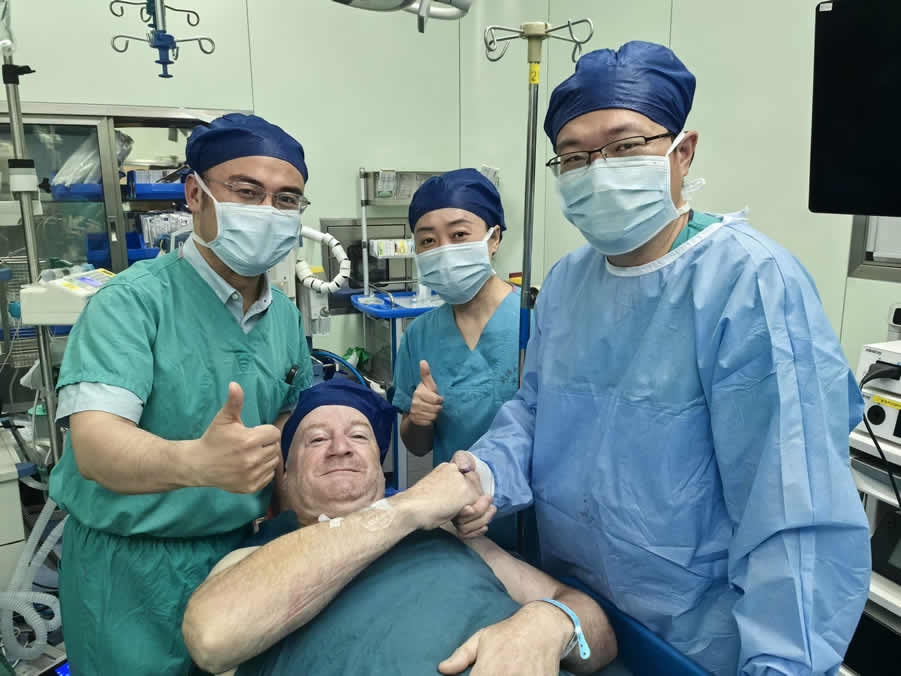
In the field of cell therapy, Ruijin Hospital Affiliated to Shanghai Jiao Tong University School of Medicine, with rich experience in CAR-T cell therapy, has established an international support system covering the entire diagnosis and treatment process, having served more than 80,000 foreign patients in total. 62-year-old Oscar Chalupuski, former captain of the South African Olympic Kayak Team, was diagnosed with multiple myeloma. Facing the advanced hematological tumor that was judged as "refractory and even hopeless" by doctors in multiple countries, he finally chose to travel to Ruijin Hospital in Shanghai for CAR-T therapy. Overseas cancer patients are flocking to China for CAR-T treatment — in the relevant treatment cases completed by one medical institution, 90% of the patients come from overseas countries including New Zealand, the United Kingdom and Germany.
In Hainan Boao Lecheng International Medical Tourism Pilot Zone, relying on the unique policies of "special medical services, special research, special operation and special international medical exchanges", more than 540 urgently needed imported drugs and medical devices have been introduced and achieved "first use in China". In 2025, over 9,300 overseas patients from 14 countries and regions around the world traveled to Lecheng for medical treatment and tourism. Alexander, a Greek Silicon Valley engineer, was unfortunately diagnosed with glioma. After multi-party comparison, he chose to receive treatment with the internationally innovative drug Vorasidenib at West China-LeCheng Hospital of Sichuan University — a drug that has not yet been launched in Greece.
From traditional wellness projects such as ancient acupuncture, tuina massage and herbal baths, to integrated Chinese and Western medicine characteristic diagnosis and treatment solutions that combine modern medical technologies, and then to international cutting-edge technologies including proton therapy and CAR-T cell therapy — China's medical wellness landscape is now driven by two wheels, evolving from "traditional charm" to "hard-core strength".
Pain Points in Cross-Border Medical Treatment: Who Will Bridge the Gaps?
However, many foreign friends who plan to experience TCM wellness or even seek cutting-edge diagnosis and treatment services in China often get stuck in unfamiliar medical procedures, language communication barriers, trivial itinerary arrangements and other problems. From visa application, flight and hotel booking, to registration queuing, medical record translation and medical report sorting, and then to post-operative rehabilitation follow-up — every link may become a "breakpoint" in cross-border medical treatment.
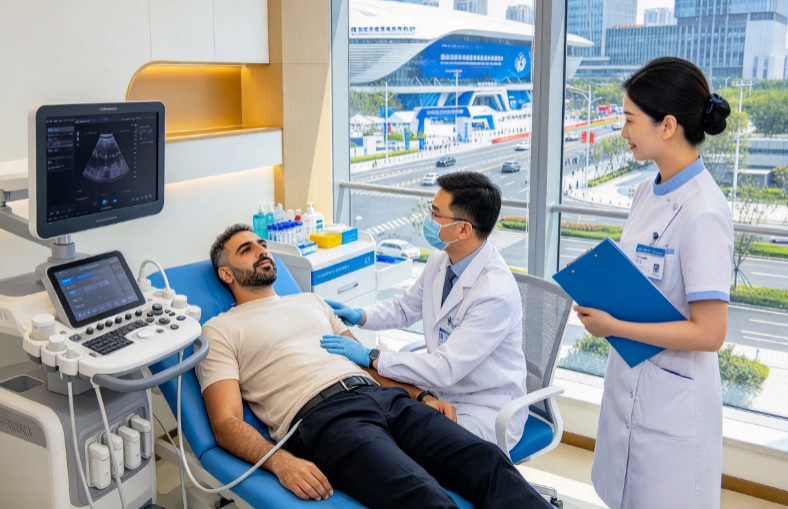
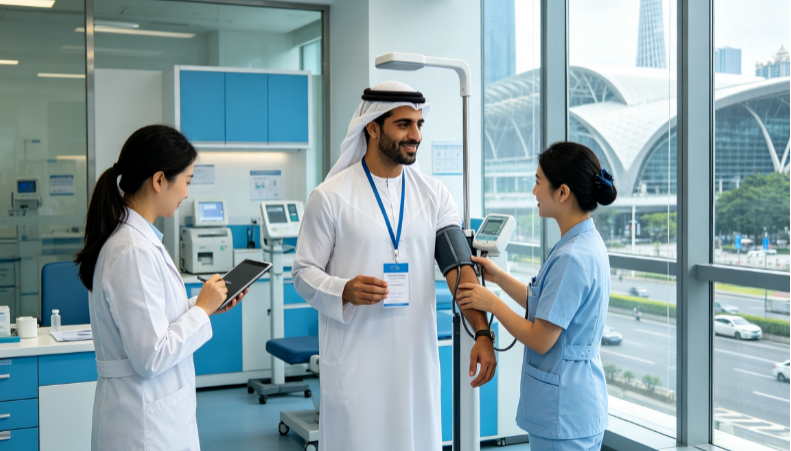
The Union Senior Medical Center of Guangdong Provincial People's Hospital has built a full-chain service system covering appointment, examination, treatment, settlement and other links, providing 24-hour multilingual translation, one-on-one medical attendant and other convenient services, having served patients from 151 countries and regions in total. But for most foreign patients, facing a completely unfamiliar medical system and language environment, they still need a professional and reliable service platform to take charge of the whole process.
Dovecure Medical Escort: Making Cross-Border Medical Treatment Worry-Free
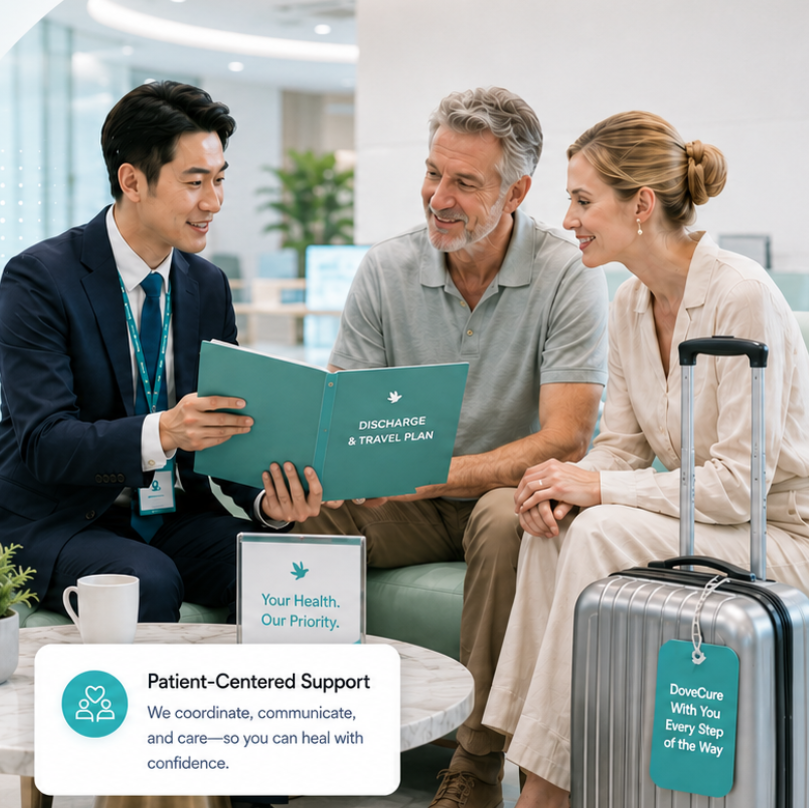
To ensure that global visitors traveling from afar can smoothly enjoy high-quality integrated medical and cultural tourism services in China, Dovecure full-process medical escort platform provides foreign friends with full-range escort services for medical treatment in China — covering visa services, airport pickup and drop-off, flight and hotel booking, medical appointment services, bilingual medical escort and in-hospital care, medical record translation, medical report translation, high-end experience tourism, TCM wellness tourism and other full-process services.
From pre-departure procedure preparation, to transportation and accommodation after arrival, and then to language communication and medical document translation during medical visits, Dovecure Medical escorts through all service breakpoints for cross-border travel to China, so that international friends do not need to worry about trivial procedures, and can safely experience China's high-quality medical resources and unique cultural tourism charm.
Today, the boundary of "TCM + cultural tourism" is still expanding. It not only carries the wisdom of traditional medicine spanning thousands of years, but also connects China's top modern medical technology resources. From seaside TCM physiotherapy in Sanya, to CAR-T therapy in Ruijin Hospital Shanghai, to precise proton radiotherapy in Guangzhou, and to internationally innovative drugs and medical devices in Boao Lecheng — an open China is welcoming global visitors with an inclusive attitude, allowing more international friends to not only enjoy the magnificent landscapes of China during their journeys across the country, but also personally experience the professionalism and warmth of China's medical services, and embark on a health journey with unique new meanings.

(1).png)
.png)
.png)