 English



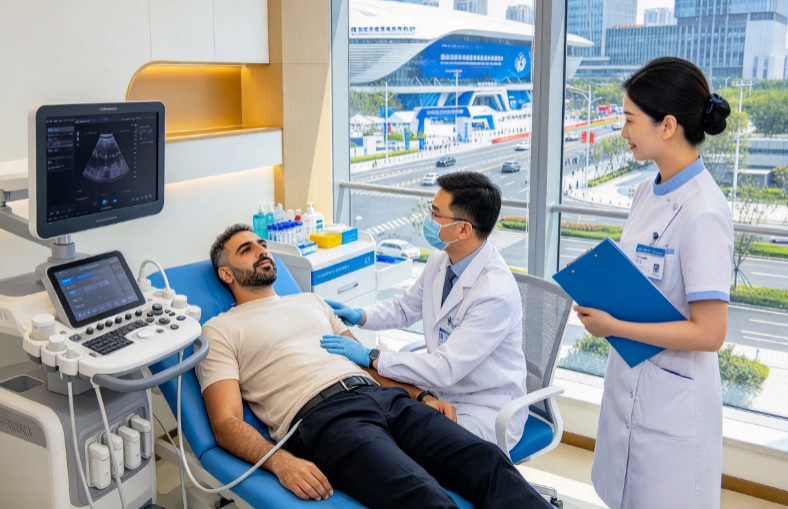
Health Reminder for the 140th Canton Fair: Young Stroke Threatens Middle Eastern Merchants, Carotid Ultrasound+TCD Early Screening, DOVECURE Escort Throughout the Process.
Stroke is becoming younger: Middle Eastern businessmen must be wary of the 'brain time bomb'
The 140th Canton Fair is about to open, and purchasing merchants from across the Middle East are once again beginning their annual "Guangzhou season." Days of non-stop walking through exhibition halls, intensive business negotiations, irregular eating and sleeping schedules... For many Middle Eastern merchants, these are all part of the "standard package" of the Canton Fair. But few people realize that amid this high-intensity pace, a hidden and menacing health threat is quietly closing in — cerebral stroke, commonly known as a "brain attack."
I. Stroke Is No Longer a "Disease of Old Age": Young Middle Easterners Are Also Affected
In many people's minds, stroke is "a disease that only elderly people get." But the reality is that the age of stroke onset is continuously dropping. According to World Health Organization data, approximately one-third of strokes worldwide occur in people under 65, and in the Middle East, this proportion is even higher — in some countries, more than 20% of strokes occur in middle-aged and young people under 45.
Why is the trend of stroke affecting younger people especially pronounced in the Middle East? The answer lies in several major health risks that are highly prevalent among Middle Eastern populations:
First, the extremely high prevalence of hypertension. Hypertension prevalence in some Middle Eastern countries exceeds 35%, nearly twice the global average. Hypertension is the primary risk factor for stroke — over 70% of strokes are associated with it. Many Middle Eastern merchants have chronically elevated blood pressure without any symptoms and do not even know it. Allowing high-pressure blood flow to batter cerebral blood vessels over the long term is like planting a "time bomb."
Second, metabolic syndrome is widespread. Obesity, hyperlipidemia and hyperglycemia often appear "bundled together" among Middle Eastern merchants. High blood sugar damages the vascular endothelium, high blood lipids accelerate atherosclerosis, and obesity increases the burden on the heart and blood vessels — these factors combine to make cerebral blood vessels age more than a decade earlier than they should.
Third, high smoking rates. Smoking rates among men in the Middle East remain persistently high, exceeding 40% in some countries. Smoking damages the vascular endothelium and promotes thrombosis, more than doubling the risk of stroke.
Fourth, high work pressure and irregular routines. Constantly traveling for business, staying up late, jet lag, frequent social engagements and little exercise — all of these further push up stroke risk.
For Middle Eastern merchants, stroke is not a "distant disease of old age" but a "occupational health killer" that can strike as early as one's thirties and forties.
II. Never Ignore These "Warning Signs"
Although stroke strikes suddenly, many people's bodies have already sent out "warning signals" in the hours, days or even weeks before an attack — it is just that most people do not take them seriously.
The most common warning signs include:
- Sudden dizziness or headache: Severe headache with no obvious trigger, or a feeling of the world spinning and being unable to stand steadily;
- Numbness or weakness on one side of the body: An arm or leg suddenly goes numb or cannot be lifted, or walking veers off course;
- Slurred speech: The tongue suddenly feels stiff, speech becomes unclear, or difficulty understanding what others say;
- Blurred vision: Suddenly unable to see clearly with one eye or both eyes, or seeing double;
- Frequent yawning and drowsiness: Feeling sleepy even after getting enough sleep, and tired no matter how much rest is taken.
These symptoms may last only a few minutes and then disappear. Medically, this is called a "transient ischemic attack (TIA)," or a "mini-stroke." Many people think "it's fine now that it's over," but in reality, a mini-stroke is a warning sign of a major stroke — after a TIA, the risk of a serious stroke in the short term rises sharply.
If any of the above symptoms occur during the Canton Fair, do not tough it out, and do not assume "it will be fine after some rest." Seek medical attention immediately.
III. Two Tests to Understand Your Cerebrovascular Condition in Advance
Although stroke is dangerous, it is by no means unpreventable. The earlier the screening and the earlier the intervention, the lower the risk. For Middle Eastern merchants, the following two tests form the "golden combination" for assessing cerebrovascular health:
1. Carotid Ultrasound: The "Window" to Blood Vessels Throughout the Body
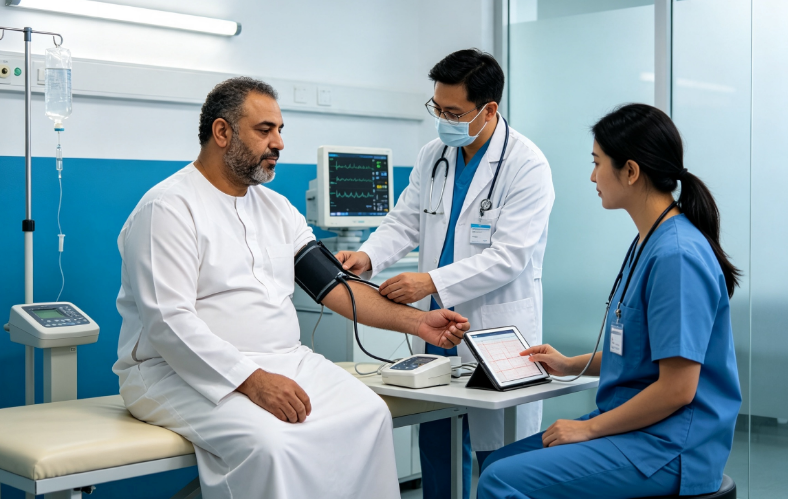
The carotid arteries are the main channels supplying blood to the brain, delivering blood to the front two-thirds of the brain. Carotid ultrasound can clearly show whether the inner walls of the carotid arteries have thickened, whether plaques have formed, and the degree of vascular stenosis.
Because the carotid arteries are located superficially and easy to examine, they are called the "window" to blood vessels throughout the body — the degree of carotid atherosclerosis essentially reflects the health of the cerebral blood vessels and systemic arteries. Research shows that people with carotid plaques face a 2–3 times higher risk of stroke than people without them.
2. Transcranial Doppler (TCD): Directly Monitoring Intracranial Blood Flow
If carotid ultrasound examines the "entrance," Transcranial Doppler (TCD) examines the "interior." TCD uses ultrasound to detect the blood flow velocity, direction and spectrum of major intracranial vessels, determining whether cerebral blood vessels have spasm, stenosis, occlusion or malformation.
TCD is a completely non-invasive, radiation-free examination that is simple to perform and inexpensive, yet it provides extremely valuable information about cerebrovascular function. For people with hypertension, hyperlipidemia, or frequent headaches and dizziness, TCD is a highly worthwhile screening test.
Together, these two tests take less than an hour and are not expensive, yet they can give a clear picture of your cerebrovascular health. Getting them done in Guangzhou during the Canton Fair costs far less than waiting until problems arise after returning home.
IV. If a Stroke Strikes? Time Is Brain
The most critical factor in stroke treatment is "racing against time." In ischemic stroke, for every minute of delay, 1.9 million brain cells die. The first 4.5 hours after onset form the golden window for intravenous thrombolysis, and within 6 hours, thrombectomy can be considered — the earlier the patient reaches the hospital, the better the prognosis.
But for foreign merchants far from home, a sudden stroke presents far greater difficulties than for locals: not knowing which nearby hospital has a stroke center, language barriers that make it hard to describe symptoms, unfamiliarity with emergency registration procedures, and having no family members around to sign consent forms... Every single one of these can delay precious treatment time.
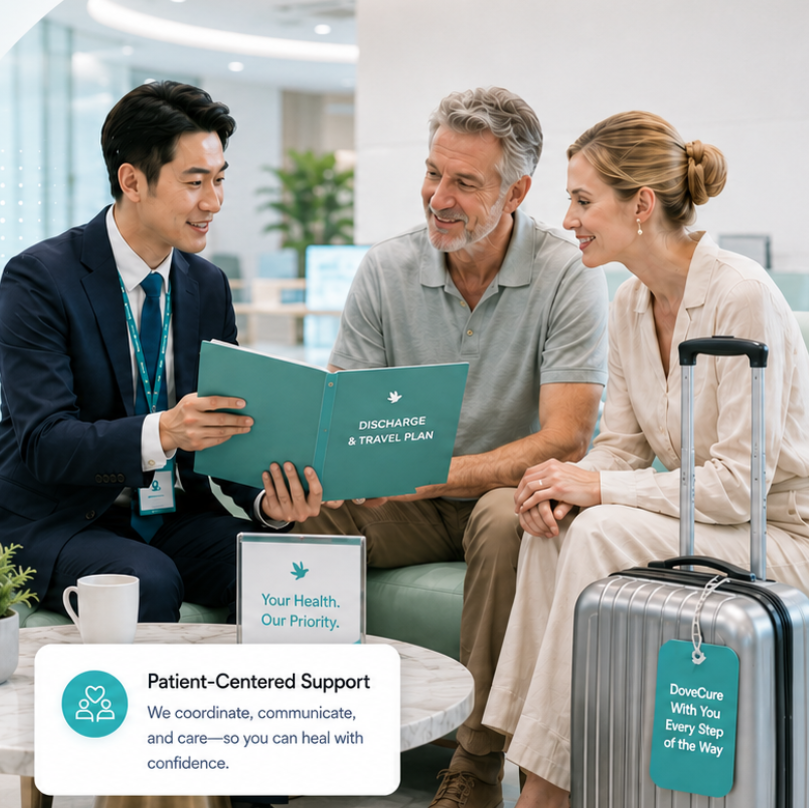
This is precisely where the value of DOVECURE lies. As a professional institution deeply engaged in foreign-related medical services in Guangzhou for many years, DOVECURE not only helps you arrange preventive cerebrovascular screening, but can also provide 24-hour emergency medical accompaniment services when every minute counts:
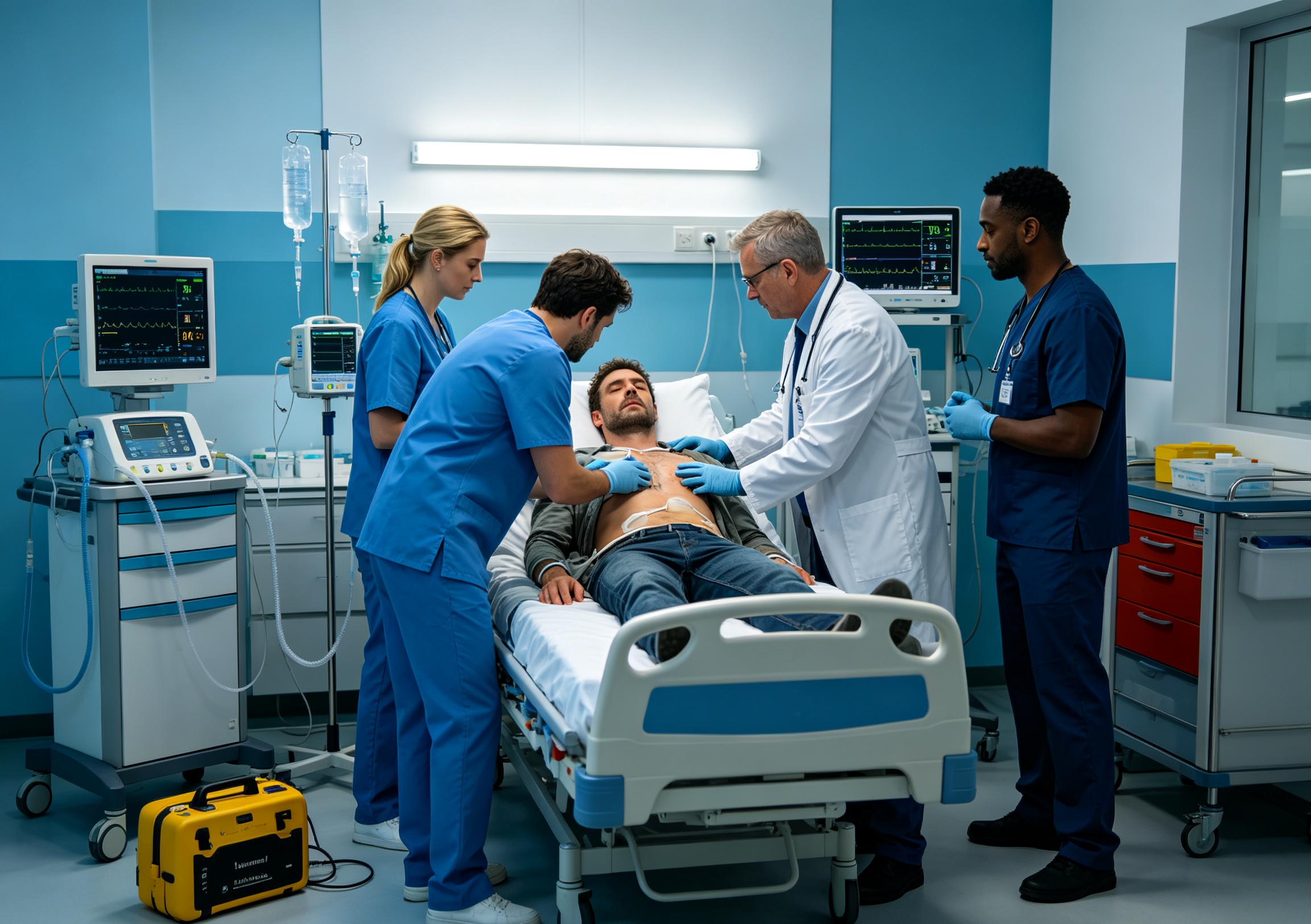
- Rapid transport to hospital: Once stroke-like symptoms appear, a DOVECURE vehicle can take you to a top-tier public hospital with a stroke center in the shortest possible time;
- Full-process medical accompaniment: Bilingual coordinators with a medical background accompany you throughout, accurately conveying your condition to doctors, assisting with registration and payment, and explaining diagnosis and treatment plans;
- Hospitalization coordination: If hospitalization is needed, DOVECURE can assist with arranging beds, connecting with specialists, contacting family members and handling all kinds of procedures;
- In-hospital care: Professional caregivers can be arranged for 24-hour care, so your family does not need to fly over specially.
For merchants constantly on the road, having a "medical butler on call" is the greatest peace of mind for both yourself and your family.
Stroke is the second leading cause of death worldwide and the leading cause of adult disability. For Middle Eastern merchants, the "high-risk factors" — high body weight, high blood pressure, high blood lipids, high blood sugar and high stress — almost everyone has a few of them to varying degrees. Never dismiss them because "I'm still young" or "I don't feel anything."
Take the opportunity of attending the 140th Canton Fair in Guangzhou to spend half a day getting a carotid ultrasound and Transcranial Doppler — a "comprehensive check-up" for your cerebral blood vessels. By understanding your risks and eliminating hidden dangers, you can go further and more steadily in your business career.
If you are planning to attend the 140th Canton Fair and would like to arrange a cerebrovascular-specific screening, or wish to learn about our emergency medical care guarantee services in advance, you are welcome to contact DOVECURE. With our professional services, we will safeguard your entire trip to Guangzhou.

压缩.png)
.png)


.png)