 English





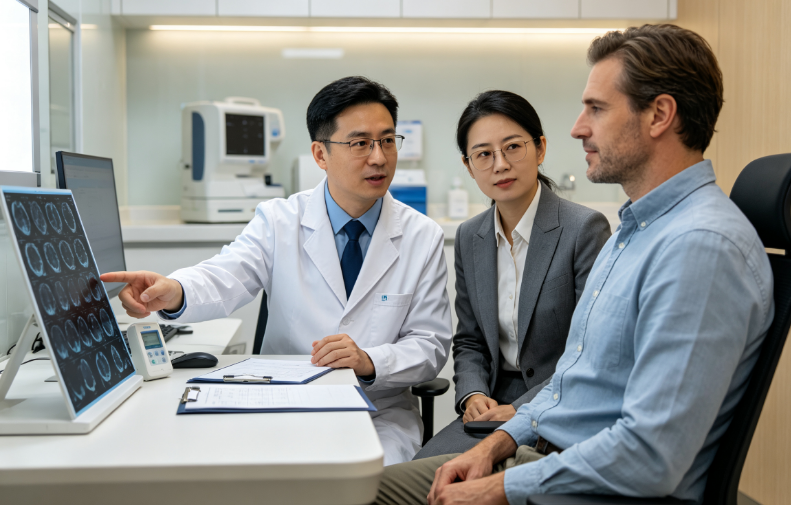
China's cutting-edge medical technologies such as brain-computer interface and stem cell therapy are developing rapidly, featuring fast clinical translation and high cost-effectiveness, and have become a new hope for patients with intractable diseases worldwide.
Brain-Computer Interface & Stem Cell Therapy — The "Future Track" of Chinese Healthcare
If high efficiency and outstanding cost-effectiveness are the current strengths that make Chinese healthcare popular with global patients, then cutting-edge medical technologies such as brain-computer interface and stem cell therapy represent the "future track" where China is rapidly taking the global lead.
A growing number of international patients are traveling to China not just for routine treatments or traditional acupuncture, but specifically for access to advanced therapies that are still stuck in the "clinical trial phase" or even unavailable in their home countries. From paralyzed patients regaining the ability to stand with the help of brain-computer interfaces, to patients with cartilage damage achieving tissue regeneration through stem cell treatment — Chinese medical innovation is opening new doors of hope for patients with complex and hard-to-treat conditions all over the world.
I. Brain-Computer Interface: From Science Fiction to Clinical Practice, China’s Speed Leads the World
"Typing with your mind," "controlling a robotic arm with thought," "a paralyzed patient standing up again" — scenes that once existed only in science fiction movies are now becoming a reality in Chinese hospitals.
Brain-Computer Interface (BCI) is known as "the ultimate form of human-machine interaction." It establishes a direct communication pathway between the brain and external devices, allowing neural signals to bypass damaged nerve pathways and directly control equipment or restore lost physical functions. On the global clinical transformation track of BCI technology, China has secured a position in the top international tier:
●In 2023, a Chinese medical team completed the first BCI implantation surgery for a patient with high-level paraplegia. After the procedure, the patient was able to control a computer to type and perform daily actions such as drinking water using only their thoughts.
●In 2024, multiple top-tier tertiary hospitals in Beijing, Shanghai and Guangzhou launched successive BCI clinical research programs targeting stroke sequelae, Parkinson’s disease and ALS (Amyotrophic Lateral Sclerosis), with many patients reporting significant improvements in motor and language functions.
●By 2025, the number of BCI clinical research projects approved in China has ranked second in the world, with a clinical transformation speed that has outpaced many Western countries.
Why has China’s BCI industry developed so rapidly? On one hand, the country has a large population of patients living with neurological diseases, providing abundant clinical cases for research. On the other hand, China’s regulatory system offers strong support for advanced medical technologies, with clear compliance approval pathways that allow promising innovations to reach patients faster.
For people living with spinal cord injury, stroke after-effects, Parkinson’s disease and ALS, this means new possibilities. Many cutting-edge therapies that patients in other countries are still waiting to access through long clinical trial queues already have mature clinical application protocols in China — at a cost far lower than in Europe and the United States.
II. Stem Cell Therapy: Rapid Development Under Standardized Regulation, A New Choice for Patients With Complex Diseases
If brain-computer interface still feels relatively new to many patients, stem cell therapy has already delivered tangible benefits to large numbers of international visitors.
Stem cells are widely known as "universal cells." By repairing damaged tissues and regulating immune function, they have shown extraordinary therapeutic potential for many conditions that conventional medicine struggles to cure. In the past, many people associated stem cell treatment with unregulated services and misleading marketing, but today, stem cell therapy in China has fully entered a standardized, compliant and well-regulated stage of development:
●By 2025, more than 200 stem cell clinical research projects in China have been officially filed with national health authorities, covering specialties including orthopedics, neurology, endocrinology, dermatology and gynecology.
●Stem cell treatments for conditions such as knee cartilage injury, diabetic foot, premature ovarian failure, Parkinson’s disease and ulcerative colitis are now available for clinical use in multiple top-tier hospitals, with thousands of patients reporting measurable improvements.
●A complete regulatory chain covering stem cell manufacturing, storage and clinical infusion has been established across the country, with strict standards enforced to guarantee both safety and therapeutic effectiveness.
International patients choose to travel to China for stem cell therapy for two core reasons.
First, high accessibility: in many Western countries, most stem cell therapies are still limited to clinical trials, and ordinary patients can hardly get access to them. In China, eligible patients can receive compliant stem cell treatment through formal public hospitals.
Second, outstanding cost-effectiveness: the same stem cell therapy that might cost hundreds of thousands of dollars in the U.S. is available in China at a fraction of the price, with technical standards and cell quality that are fully comparable.
III. Why Choose China for Advanced Medical Treatment? Three Irreplaceable Advantages
Many people may ask: isn’t Europe and the U.S. more advanced in cutting-edge medicine? Why are more and more people choosing to come to China? The answer is very practical:
First, faster clinical translation means patients do not have to wait for years for new treatments.
Western countries often have extremely long approval cycles and highly complex regulatory procedures for new medical technologies. Many therapies that are already mature in laboratories can take more than a decade to finally reach patients. In China, under the strict premise of ensuring patient safety, the clinical transformation process is far more efficient, giving patients with life-limiting and hard-to-treat conditions earlier access to potentially life-changing therapies.
Second, greater clinical experience among physicians leads to more refined, safer treatment.
No matter how advanced a technology is, its final outcome depends on the skill of the doctor performing it. China’s large patient population gives local clinicians far more hands-on practice opportunities, with greater proficiency in procedures and richer experience in managing complications. The difference in results between a doctor who has performed 1000 similar procedures and one who has performed only 100 can be enormous.
Third, friendly pricing makes advanced therapies accessible to ordinary families.
Cutting-edge medical treatments are often associated with sky-high costs elsewhere. In China, supported by a complete domestic medical industrial chain and reasonable healthcare pricing systems, the same advanced treatment plans are usually priced at 1/3 to 1/5 of the cost in Europe and the U.S. — making them affordable for far more ordinary households.
IV. Planning to Try Advanced Therapies? Avoid the Risks With Professional Support
As demand for these innovative treatments grows, the market has also become mixed with unregulated services: informal clinics making exaggerated claims, false promises, and non-transparent pricing. International patients, who often lack local information and language support, are extremely vulnerable to these pitfalls. Many overseas patients who want to seek advanced treatment in China face very real challenges:
●Not knowing which hospitals are legitimate and which medical teams are reliable
●Unable to read Chinese-language medical materials, and cannot distinguish
●between officially approved programs and fraudulent services
●Facing language barriers that prevent them from accurately communicating their medical history and evaluating treatment plans with doctors
●Being completely unfamiliar with local conditions, making travel, accommodation and the entire medical process unnecessarily complicated
This is exactly where DOVECURE Medical Concierge Service delivers its unique value. As a professional service provider deeply rooted in China’s healthcare ecosystem, we have established formal partnerships with advanced medical teams at top-tier public hospitals across the country. We connect international patients only to compliant, trustworthy advanced medical resources backed by verified real-world clinical data:
1.Formal Resource Screening — No Risk of Unregulated Services
We only recommend nationally filed clinical research programs and legally permitted treatment services operated by top-tier public hospitals. Every medical institution we partner with goes through strict qualification verification, helping you avoid all unsafe and unregulated "traps."
2.Precise Medical Condition Assessment — Expert Pre-Evaluation, No Unnecessary Recommendations
After you share your medical records with us, we will arrange for leading specialists in the relevant field to conduct a pre-assessment of your condition, confirm whether you are a suitable candidate for advanced therapy, and identify the most appropriate treatment plan for you. We will never recommend unnecessary or unsuitable treatments.
3.Full Bilingual Medical Accompaniment — Medically Trained Translators Ensure Zero Communication Barriers
Our bilingual patient coordinators with formal medical backgrounds stay with you throughout every hospital visit. They help you accurately translate your medical history, explain treatment plans clearly, and handle all hospital administrative procedures on your behalf — so you can focus entirely on your treatment.
4.One-Stop Supporting Services — We Take Care of All the Details for a Stress-Free Journey
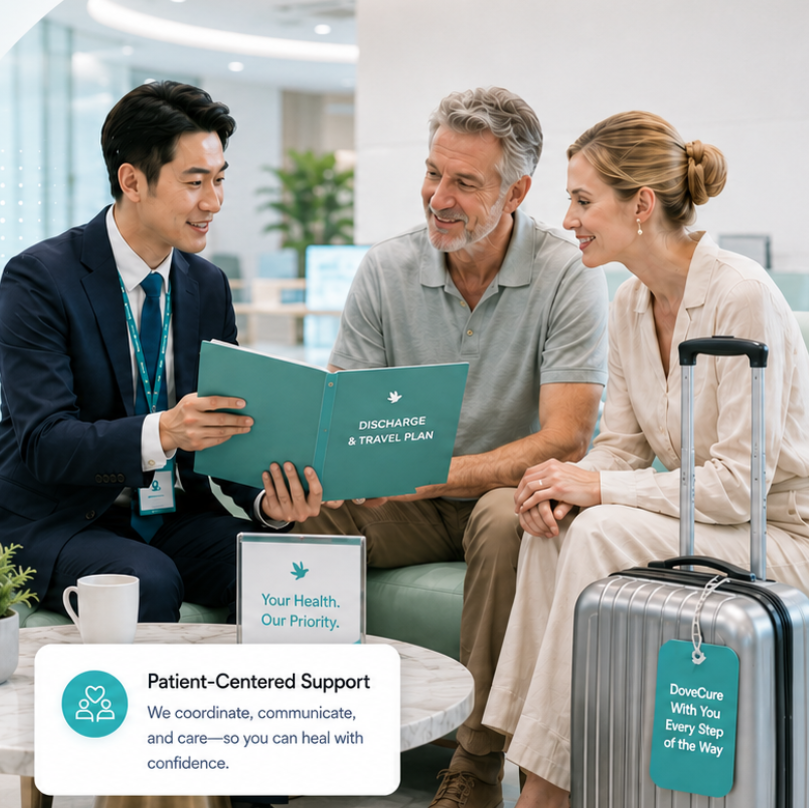
Our full-service package covers everything from airport pickup and hotel booking, to medical record translation and long-term post-treatment follow-up after you return home. We manage every part of your travel and medical journey to ensure it is completely worry-free.
From time-honored traditional therapies such as acupuncture and Chinese herbal medicine, to futuristic innovations including brain-computer interface and stem cell treatment — the appeal of Chinese healthcare has never been limited to a single dimension. It carries thousands of years of medical heritage, while also driving forward the next wave of global medical innovation. It offers world-class technology at accessible prices.
If you or a family member is living with a hard-to-manage medical condition, and you want to learn more about China’s advanced medical technologies, we invite you to contact DOVECURE Medical Concierge. With our professional expertise and patient-centered service, we will help you connect with the most suitable medical resources in China, and find the hope you have been looking for.
.png)



.png)