Department Details
The Laboratory Animal Facility of Peking University Cancer Hospital & Beijing Institute for Cancer Research was established in 1976 and has obtained a barrier environment license for mice and rats issued by the Beijing Municipal Science & Technology Commission [SYXK (Jing) 2021-0031]. The total building area is approximately 400 square meters, equipped with individually ventilated cage (IVC) systems (1,500 cage slots) and some isolators, with a daily housing capacity of approximately 8,500 animals.
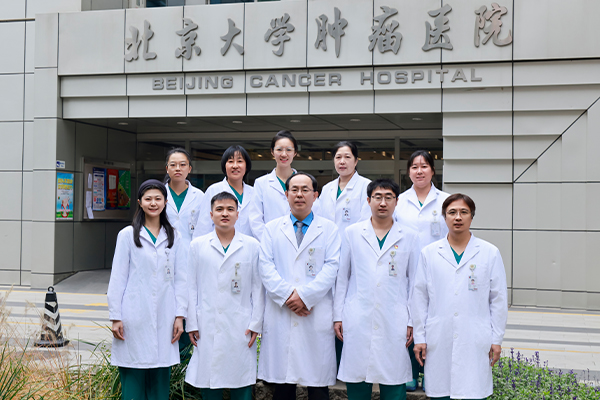
The facility currently has 10 staff members: 1 director (oncology, Ph.D.); 6 senior technicians/technicians, including 4 with master's degrees (animal science, veterinary medicine, medical experimentation); and 3 staff responsible for high-pressure sterilization and cage washing. All personnel are certified for their positions.
Technical services provided by the facility include: establishment of tumor cell and tissue transplantation tumor models (CDX and PDX), application research of transgenic mouse models, anti-tumor drug efficacy and toxicology experiments, humanized immune reconstruction, etc.; using Spectrum-CT and Lumina II in vivo imaging systems to trace the proliferation and metastasis of tumor cells in mice, and to study the pharmacokinetics and action targets of anti-tumor drugs.
The facility has participated in the revision of the national standard "Quality Control for Reproduction and Developmental Health of Laboratory Animals" and the Beijing local standards "Technical Specification for Welfare and Ethical Review of Laboratory Animals" and "Technical Specification for Animal Experiment Management and Operation"; and has undertaken national continuing education programs and graduate student animal experiment demonstrations. Over the past five years, research groups from the institute have published an average of more than 40 SCI articles related to animal experiments per year as first or corresponding authors, including journals such as Nature and Cell.
Honors received by the facility include: the Teaching Support Award and the Annual Scientific Research Patent Award from Peking University Health Science Center; the Excellent Teaching Collective, Excellent Teaching Mentor, Advanced Individual in Teaching Management, and Special Award for Scientific and Technological Innovation from Peking University Clinical Oncology College.
 English