Department Details
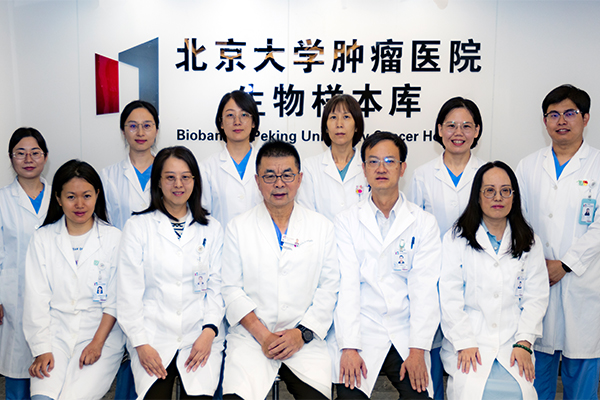
The Bio-bank of Peking University Cancer Hospital was established in 1996, making it one of the earliest bio-banks in China to initiate large-scale, organized, and standardized construction. It has accumulated nearly three decades of valuable experience. In the early stages of bio-bank development in China, our institution demonstrated high strategic foresight by beginning to build a standardized and regulated system for sample collection, storage, and management. Our institution organized the writing and publication of the first two monographs in the field of tumor tissue biobanking in China ("Common Technical Manual for Tumor Tissue Biobanking" (2006) and "Capacity Building and Best Practices for Biobanks" (2013)). During a period of extreme scarcity of industry reference materials, these works provided standardized guidance and assistance to numerous peer institutions in their biobank construction.
Through years of continuous development and accumulation, the bio-bank has achieved significant scale effects, now holding over 600,000 tumor sample inventories. All stored samples have been registered with the National Human Genetic Resources Management Office, ensuring the legality and compliance of the resources. The bio-bank consistently regards quality as its lifeline, implementing and adhering to a quality management system. It has successively obtained international certifications and accreditation standards, including ISO 9000 (2015) and ISO 20387 (GB/T 37864), ensuring that quality control throughout the entire process from sample collection to utilization reaches world-class levels. These high-quality sample resources have successfully supported over 60 major research projects and contributed to the publication of high-level SCI papers, significantly advancing tumor translational medicine research.
In terms of technical management, the bio-bank has achieved comprehensive informatization with regular upgrades, featuring a dedicated database system, deep-freeze-specific barcode labeling, 24-hour environmental monitoring and alarm systems. By introducing automated sample storage and processing equipment, it enhances work efficiency and sample quality stability while ensuring sample safety, realizing "end-to-end quality management" for samples.
In the future, guided by a science-driven top-level design, the bio-bank will collaborate more extensively with clinical departments and research units. Beyond traditional tissue and plasma/serum samples, the bio-bank can collect and store a wider variety of tumor tissue and blood sample types to meet the latest research demands in cutting-edge fields such as tumor immunotherapy and genomics. The Bio-bank of Peking University Cancer Hospital will continue to strive to become an internationally leading, science-driven biological sample resource platform, leveraging its abundant, high-quality, and highly standardized sample resources to support high-level tumor research, ultimately benefiting a broad range of cancer patients.
 English