Department Details
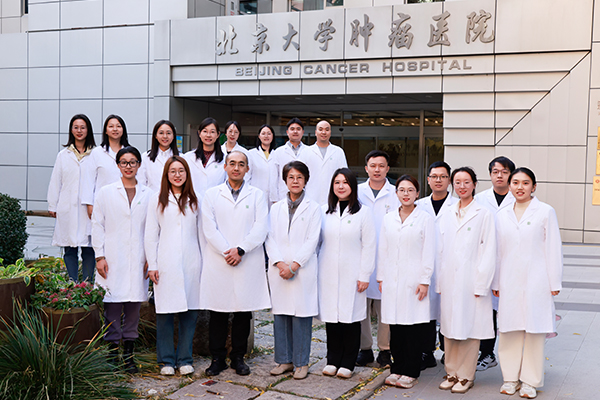
The Genetics Research Laboratory of Peking University Cancer Hospital (Beijing Cancer Hospital & Beijing Institute for Cancer Research) was established in 1976. It currently has 10 full-time scientific research and technical personnel, including 2 with senior professional titles, 6 with associate senior titles, 3 doctoral supervisors, 1 master's supervisor, and over ten master's and doctoral students currently enrolled.
The research team of the Genetics Laboratory adheres to a value orientation driven by scientific questions and practical needs. For a long time, it has been deeply rooted in high-incidence areas of upper gastrointestinal cancer in China and frontline clinical settings, establishing multi-source, multi-center specialized cohorts for upper gastrointestinal cancer, including community-based natural populations, endoscopy clinic patients, and clinical patients. The total sample size is 150,000, with a maximum follow-up of 20 years, and over 600,000 person-times of various biological samples collected at multiple time points. Focusing on key issues such as "the etiological mechanisms of upper gastrointestinal tumors in China, appropriate strategies for precision prevention and screening, and the translational application of population and clinical big data," the laboratory has formed collaborative alliances and established research bases with multiple local governments and medical institutions. It has taken the lead internationally in conducting population-based randomized controlled evaluation studies for upper gastrointestinal cancer screening and the development of full-chain precision screening technologies. It has also established and promoted a new system for precision prevention, screening, and monitoring of upper gastrointestinal tumors, primarily esophageal and gastric cancers, at the provincial level, advancing the precision development of cancer prevention and monitoring in China.
Seven members of the research team hold positions such as chairperson, vice president, executive council member, council member, vice chairperson, standing committee member, and committee member in 13 professional committees or branches across 11 national and provincial-level societies or associations. They have successively undertaken dozens of vertical research projects, including the National Health Industry Public Welfare Scientific Research Special Project, the National Key Project for Science and Technology Basic Resource Investigation, the National Key Research and Development Program, key and general projects of the National Natural Science Foundation of China, the 973 Program, the 863 Program, major projects of the Beijing Natural Science Foundation and the "Beijing-Tianjin-Hebei" regional cooperation project, and key projects of the Beijing Digestive Collaborative Center, with total funding exceeding 70 million RMB. They have cumulatively published over a hundred high-level scientific research papers, including systematic works in authoritative journals across multiple professional fields such as oncology, gastroenterology, endoscopy, epidemiology, surgery, and health economics. They have been granted 4 invention patents and 1 software copyright, and have edited or co-edited 5 academic monographs.
 English