Department Details
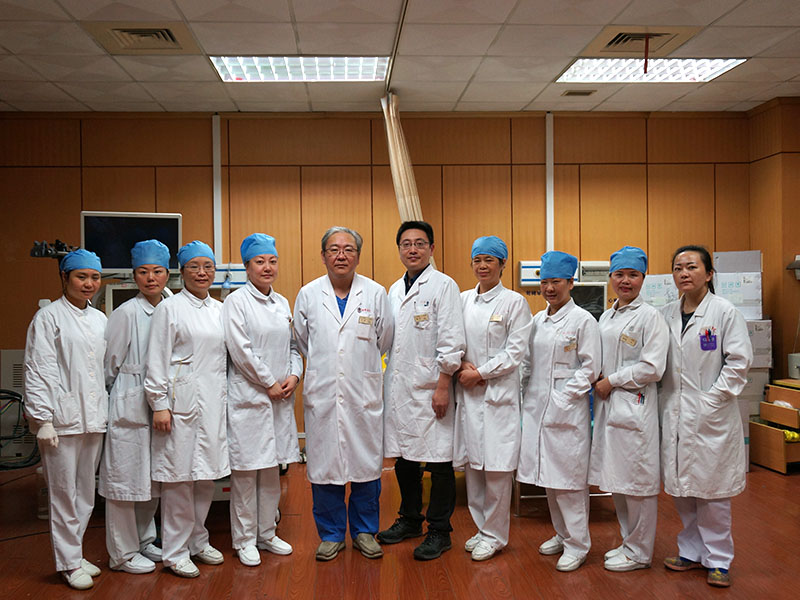
After nearly 40 years of rapid development, the Endoscopy Center of Shanghai Pulmonary Hospital has become a leading interventional respiratory diagnosis and treatment center in China, equipped with advanced facilities and comprehensive techniques. The department currently has 15 staff members, including 3 doctors with doctoral degrees and 3 with senior professional titles. It operates 6 endoscopy rooms, among which 2 are dedicated tuberculosis endoscopy rooms. Annually, the center performs over 20,000 endoscopic diagnostic and therapeutic procedures, including more than 5,000 Grade III and IV endoscopic surgeries. It introduces 1-2 new techniques each year and routinely conducts painless bronchoscopy and outpatient bronchoscopy examinations.
The department offers a range of diagnostic endoscopic techniques: conventional bronchoscopy (for internal medicine diagnosis and preoperative surgical evaluation), narrow-band imaging bronchoscopy (NBI), autofluorescence imaging bronchoscopy (AFI), transbronchial needle aspiration (TBNA), transbronchial lung biopsy (TBLB), cryobiopsy, endobronchial ultrasound (EBUS), virtual bronchoscopy (virtual navigation VBN) combined with thin bronchoscopy, electromagnetic navigation bronchoscopy (ENB), medical thoracoscopy, esophagoscopy, and gastroscopy. Therapeutic techniques include foreign body removal, high-frequency electrosurgery, argon plasma coagulation, laser therapy, rigid bronchoscopy for malignant airway stenosis, medical thoracoscopic pleural adhesiolysis, bullectomy, tracheal/esophageal stent placement, high-pressure balloon dilation, cryotherapy, bronchoscopic lung volume reduction, bronchial thermoplasty, bronchopleural fistula closure, percutaneous cryoablation and thermal ablation, electromagnetic navigation-guided (thermal ablation, cryotherapy, preoperative staining, marker localization), bronchoalveolar lavage, and tracheoesophageal fistula closure.
The department specializes in various advanced techniques, including the combined use of peripheral ultrasound, virtual navigation, and electromagnetic navigation for diagnosing and treating peripheral pulmonary nodules; endobronchial treatment for bronchial tuberculosis, lymph node tuberculosis, and refractory tuberculosis lesions; personalized comprehensive treatment for benign and malignant airway stenosis; minimally invasive treatment for bronchopleural fistula; and endoscopic treatment for chronic obstructive pulmonary disease and bronchial asthma.
The Endoscopy Center of Shanghai Pulmonary Hospital serves as a training base for respiratory endoscopy under the Chinese Medical Doctor Association and is the first electromagnetic navigation training base in the Asia-Pacific region. It annually receives over 100 domestic and international visiting physicians and PCCM interventional pulmonology trainees. The department hosts the "International Forum on Interventional Pulmonology" and the "Bronchoscopy-Related Techniques Update Course" each year. It trains over 60 resident physicians and domestic and international visiting doctors annually, providing targeted education for new employees, standardized training, and specialized training students. Additionally, it conducts 5-10 specialized training sessions annually on EBUS-TBNA, EBUS-GS, and virtual navigation, holds over 10 electromagnetic navigation demonstrations and teaching sessions, and offers year-round specialized training in Grade III and IV respiratory endoscopic techniques, cultivating a large number of medical professionals in interventional pulmonology both domestically and internationally.
The department's staff have led or participated in numerous national and municipal research projects and clinical studies, published over 20 SCI papers, and obtained more than 10 invention patents. They have edited the book "Clinical Guidelines for Interventional Bronchoscopy" and contributed to the writing of several monographs, including "Training Course for Tuberculosis Specialists" and "Key Surgical Techniques in Thoracic Surgery: Lung Resection and Bronchoplasty."
 English