 English




.png)
Many Cases of Esophageal Cancer Are Difficult to Detect in the Early Stage
Source: Life Times
Interviewed Expert: Wei Anwei, Associate Chief Physician, Endoscopy Center of Henan Cancer Hospital
Special Correspondent of This Newspaper: Wang Xiaofan
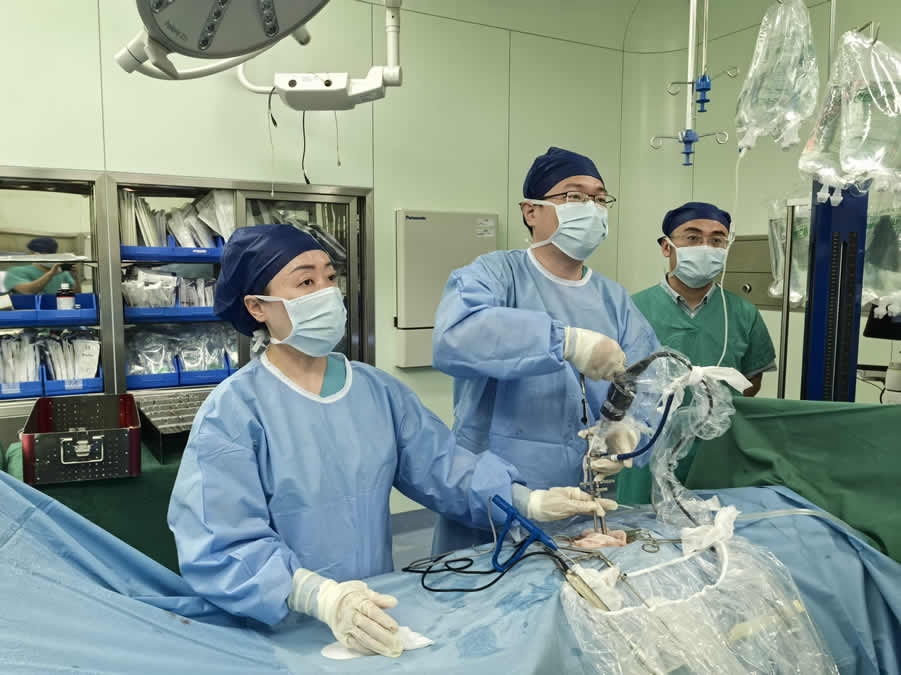
Recently, the Endoscopy Center of Henan Cancer Hospital consecutively performed endoscopic ultrasonography for 11 patients in one morning, and all of them were diagnosed with advanced esophageal cancer. This set of data not only reflects the severe reality of the low early detection rate of esophageal cancer in China, but also sounds the alarm for the public's awareness and prevention of esophageal cancer.
Esophageal cancer is a malignant tumor that occurs in the epithelial mucosa of the esophagus. Its incidence ranks among the top of malignant tumors of the digestive tract. It mostly affects people over 40 years old, and the incidence rate in men is higher than that in women. People who smoke and drink alcohol for a long time, have a family history of esophageal cancer, or live in areas with a high incidence of esophageal cancer have relatively higher risks. It is worth noting that the prognosis of esophageal cancer is closely related to the timing of detection. After standardized treatment for early-stage patients, the 5-year survival rate can reach more than 90%, while once it progresses to the middle and advanced stages, the 5-year survival rate is less than 30%.
Wei Anwei, Associate Chief Physician of the Endoscopy Center of Henan Cancer Hospital, said that the early symptoms of esophageal cancer are concealed. On the one hand, the nerve perception of the esophageal mucosa is not sensitive. When the early tumor only develops lesions in the mucosal layer, it usually does not affect the swallowing function. Patients may only have occasional mild foreign body sensation when swallowing, dull pain behind the sternum and other symptoms, which are extremely easy to be mistaken for common problems such as pharyngitis and gastroesophageal reflux. On the other hand, the popularization rate of esophageal cancer screening needs to be improved. Routine physical examinations often lack targeted esophageal examination items. As an effective means to detect early esophageal cancer, gastroscopy has not been popularized as a routine physical examination item because it is an invasive operation, which makes many early lesions difficult to be detected in time. In fact, esophageal cancer is not completely without warning. If patients repeatedly experience discomfort such as a sense of choking when eating, or gradually worsening burning sensation or pain behind the sternum, they should be highly alert and seek medical treatment in time.
The occurrence of esophageal cancer is closely related to living habits and environmental factors. Long-term consumption of overheated drinks and overheated food will repeatedly burn the esophageal mucosa; frequent consumption of pickled foods (containing nitrite) and moldy foods (possibly containing aflatoxin) will also increase the risk of the disease; long-term smoking and drinking will cause a variety of carcinogens to continuously stimulate the esophageal mucosa; chronic diseases such as gastroesophageal reflux disease and esophageal polyps that have not received standardized treatment for a long time may gradually develop into precancerous lesions, and even esophageal cancer.
The key to protecting esophageal health lies in prevention and early intervention. Adjust your diet: avoid eating overheated, pickled and moldy food, quit smoking and limit alcohol, and chew slowly when eating. Balance nutrition: eat more fresh fruits and vegetables to supplement vitamins and dietary fiber, which helps enhance the mucosal repair ability. Manage diseases: if you have symptoms such as gastroesophageal reflux, you should actively seek medical treatment, receive standardized treatment, and control the progression of the condition. Boost immunity: maintain a regular work and rest schedule and exercise moderately to improve immunity. Take the initiative for screening: high-risk groups of esophageal cancer should undergo a gastroscopy every 1 to 2 years, such as people over 40 years old, from areas with a high incidence of esophageal cancer, with a family history of esophageal cancer, or who have long-term esophageal discomfort.
Disclaimer: The information in this article is for popular science reference only and does not constitute medical diagnosis advice.
.png)