تفاصيل القسم
Since its establishment, the Department of Ophthalmology at Peking University International Hospital has consistently relied on top-tier medical resources and expert strength to steadily build a professional diagnostic and treatment system. It has now developed into a comprehensive ophthalmology department with fundus disease diagnosis and treatment as its core and fundus surgery as its prominent feature, establishing a professional benchmark in the field of fundus disease diagnosis and treatment in the northern region.
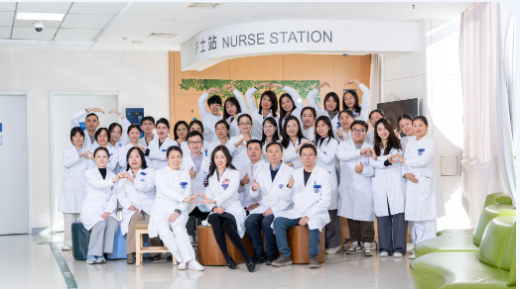
The department has a well-structured and highly skilled medical team, with comprehensive subspecialties including refractive cataract, glaucoma, strabismus and amblyopia, refractive surgery and optometry, orbital disease, and oculoplastic surgery. The team includes 11 physicians with senior professional titles and 16 physicians with doctoral degrees, with the proportion of highly educated and senior-title talents ranking among the top. It is also equipped with 17 experienced specialist nurses and 6 professional technical staff, forming an efficient service model with coordinated collaboration among "physicians, nurses, and technicians."
In terms of diagnostic and treatment resource allocation, the department, leveraging the hospital's "one bed for the whole hospital" coordinated management concept, has become one of the few departments in the hospital with an independent ward, with 40 open beds, fully ensuring patients' medical needs. In the field of clinical surgery, the department's core advantage lies in complex fundus surgery, with approximately 70% of patients coming from northern provinces and cities such as Inner Mongolia, Shanxi, and Hebei, demonstrating significant radiation capacity and regional influence.
The department has always adhered to a "patient-centered" approach. With its top-tier expert team, advanced diagnostic and treatment technologies, and comprehensive service system, it continues to provide high-quality, personalized ophthalmic medical services to a wide range of eye disease patients, striving to become a core platform for ophthalmic diagnosis and treatment as well as scientific research and teaching in the region.

 العربية