تفاصيل القسم
The Department of Plastic Surgery at Renji Hospital, Shanghai Jiao Tong University School of Medicine (referred to as Renji Plastic Surgery) was established in 1951. It is a continuation of the Department of Plastic Surgery at St. John's University School of Medicine in the United States and is one of the earliest plastic surgery disciplines established in China. The founder of the discipline, Professor Chen Shaozhou, studied under Professor F. Smith, a plastic surgery expert at Columbia University in the United States, and returned to China to serve as Professor of Oral and Maxillofacial Plastic Surgery at Aurora University School of Medicine. After the founding of the People's Republic of China, he became the first Director of Plastic Surgery at a public hospital in Shanghai and Professor of Surgery at Shanghai Second Medical University. He successively published monographs including "Repair of Unilateral Cleft Lip" and "Preliminary Report on the Application of Posterior Pharyngeal Wall Tissue Flap Transplantation for Repair of Cleft Palate." Starting from 1993, he received the Special Government Allowance of the State Council.
Renji Plastic Surgery is a member unit of the Plastic Surgery Alliance of Shanghai Jiao Tong University School of Medicine, one of the first approved bases for standardized residency training in Shanghai, a doctoral degree granting program, and a national receiving institution for visiting and further training plastic surgeons. Through the efforts of successive directors of plastic surgery, it has gradually developed into a clinical center of plastic surgery that integrates congenital deformity repair, post-traumatic or post-tumor repair and reconstruction, and aesthetic plastic surgery. It has successively cultivated a team of professionals in areas such as pathological scars, skin and soft tissue malignancies, ear, nose, and hand deformities, oculoplastic surgery, breast reconstruction, and genital plastic surgery, training more than 20 master's and doctoral students. The discipline has long focused on the clinical application of advanced technologies: in 2010, in collaboration with Professor Kotaro Yoshimura from Japan, it was the first to introduce SVF-assisted fat grafting technology into China and promote its application, opening a new chapter in adipose component transplantation. In 2014, it was the first in China to introduce autologous cultured epidermal transplantation technology, staying at the forefront in fields such as the treatment of vitiligo and dermal defect repair. In 2019, it was among the earlier institutions in China to promote immune environment evaluation for scar patients, providing diagnostic reference for patients with a "scar-prone constitution." At the same time, to ensure high-quality medical services, the hospital successively introduced and put into use medical equipment around 2000, including Leica surgical microscopes, electric dermatomes, hair transplantation machines, intense pulsed light, lasers, radiofrequency, and photodynamic therapy devices, making disease treatment more diverse and effective.
The discipline actively carries out international academic exchange activities and has successively established clinical research and basic research collaborations with multiple world-class institutions, including Harvard Medical School in the United States, the University of New South Wales in Australia, the University of Tokyo in Japan, and Seoul National University in South Korea. At the same time, the discipline participates in large domestic and international academic conferences to actively carry out academic exchanges, maintaining treatment protocols and diversified medical aesthetics synchronized with first-class international plastic surgery centers. Through long-term international mutual visits, it has collaborated with social organizations such as the World Craniofacial Foundation and the China Children's Charity Relief Foundation to assist patients with congenital facial deformities, including severe facial cleft deformities, microtia patients, and hydrocephalus patients from disadvantaged groups. The treatment work for pediatric patients has been widely reported by mainstream media such as CCTV, Southern Daily, and Shanghai Education Television, achieving positive social impact.
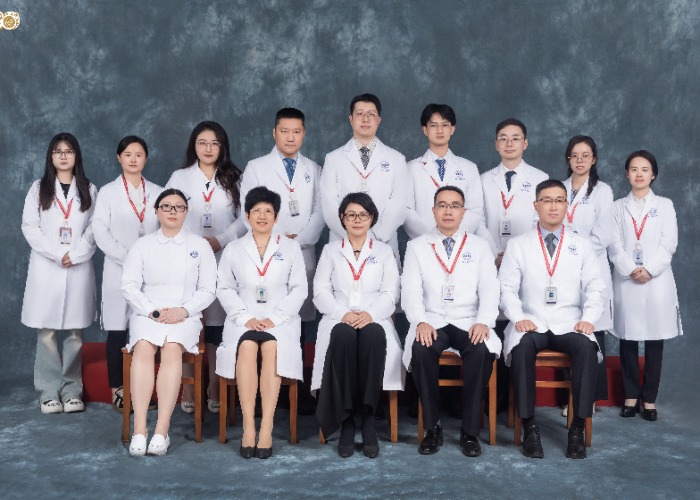
After going through many challenges, through the tireless and dedicated efforts of three generations—senior, middle-aged, and young—Renji Plastic Surgery has built a "goose-formation" team led by discipline leaders across multiple sub-specialty directions, including scar prevention and treatment, skin and soft tissue malignancies, facial feature repair, breast reconstruction, hair transplantation, genital plastic surgery, and rejuvenation medical aesthetics. It promotes a 4D medical service model of "discipline linkage," "backbone-driven," "doctor-patient interaction," and "doctor initiative," and its treatment outcomes have repeatedly received high praise from patients. In the future, Renji Plastic Surgery will remain true to its original aspiration, expand innovative medical technologies, optimize the allocation of professional resources, further refine and strengthen its capabilities, and strive to provide the public with high-quality plastic repair and medical aesthetics services.

 العربية