تفاصيل القسم
The Department of Laboratory Medicine at Renji Hospital, Shanghai Jiao Tong University School of Medicine, serves as a public service platform for the hospital. It was founded in 1946 by Deng Yulan, China's first female pathologist. It has now grown into a modern laboratory medicine discipline integrating clinical service, education, and research, and is a clinical in vitro diagnostics center encompassing five major sub-specialties: clinical biochemistry and mass spectrometry, clinical immunology, clinical microbiology, hematology, and molecular biology. The current department director is Li Min, MD, PhD, researcher, doctoral supervisor, and Shanghai Leading Talent. The Department of Laboratory Medicine at Renji Hospital is a discipline funded by the Shanghai Key Discipline Construction Project, among the first batch of nationally approved pilot disciplines for clinical application of NGS technology, and a member of the National and Shanghai Bacterial and Fungal Resistance Surveillance Networks. In 2017, the Department of Laboratory Medicine at Renji Hospital completed the consolidation of clinical small laboratories, forming a unified public testing platform for the entire hospital, ensuring testing quality, guaranteeing biosafety, achieving unified training of laboratory personnel, effectively reducing losses, and enhancing patient satisfaction and clinical diagnostic and therapeutic service capabilities.
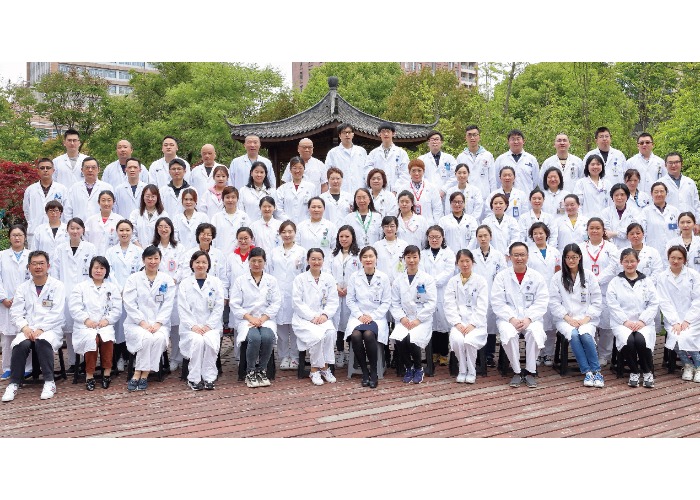
The laboratory medicine discipline has established clinical laboratories in four campuses—East, West, South, and North—equipped with advanced instruments and equipment, over 1,000 clinical testing items, and high-level medical, teaching, and research talent. It fully leverages its role as a supporting discipline of the clinical platform and can meet the various needs of clinical practice and research. The department currently has 112 formal employees, with nearly 100% holding a bachelor's degree or above and nearly 50% holding a master's degree or above. The laboratories at each branch campus, based on different clinical characteristics, have complementary testing items and differentiated development of sub-specialties, while implementing unified management. The department is divided into: Emergency Testing Group, Cadre Health Care Testing Group, Hematology Testing Group, Body Fluid Testing Group, Molecular Biology Testing Group, Biochemistry Testing Group, Immunology Testing Group, Clinical Microbiology Testing Group, NGS Group, Mass Spectrometry Group, Fever Testing Group, Sample Collection and Processing Group, Blood Drawing Center, and Waste Disposal Office. The department currently offers over 1,000 testing items. Through various measures such as internal quality control, instrument calibration, project comparison, performance verification, report review, re-testing, and training assessment, the accuracy and reliability of testing results are ensured. Continuous improvement of testing quality is the eternal theme of laboratory medicine discipline construction. Over the years, the department has participated in external quality assessment programs for clinical testing items organized by the National Center for Clinical Laboratories of the Ministry of Health and the Shanghai Center for Clinical Laboratory, achieving excellent results. It has also received honors such as the Clinical Biochemistry Reference Laboratory of the Shanghai Center for Clinical Laboratory. In 2014, the East Campus Laboratory successfully passed CNAS ISO 15189 accreditation.
In 2016, the East and West Campus Laboratories passed the CNAS ISO 15189 re-assessment and scope extension assessment, ensuring that the laboratories at each branch campus provide homogeneous services to clinical practice, while testing quality management has been continuously improved. The department emphasizes continuous improvement of teaching capabilities. The department is responsible for the "Laboratory Diagnostics" course for the five-year English program at Shanghai Jiao Tong University School of Medicine and participates in teaching "Pathogenic Microbiology." It also participates in theoretical courses and internship supervision for "Experimental Diagnostics," "Clinical Microbiology Testing," and "Basic Clinical Laboratory Testing" for the Clinical Medicine, Preventive Medicine, and Laboratory Medicine departments. The department is among the first batch of laboratory physician training bases in Shanghai and a Shanghai residency standardized training base, providing clinical consultation and support regarding the clinical significance of experimental diagnostics and item selection.
The department attaches importance to talent pipeline development. The Department of Laboratory Medicine has established a high-quality team composed of doctoral/master's degree holders, senior laboratory technicians, and laboratory physicians. Additionally, the department has an innovative research team with multidisciplinary integration and complementary strengths, and is a training site for master's, doctoral, and postdoctoral programs in Clinical Laboratory Diagnostics. The team currently has 4 doctoral supervisors and 2 master's supervisors, and has undertaken over 60 projects including Key Special Projects of the Ministry of Science and Technology of China, National Natural Science Foundation of China grants, and provincial/municipal-level projects. It has published over 100 SCI papers, with multiple clinical basic and translational research findings published in internationally authoritative SCI journals such as Nat Med, Nat Microbiol, and Cell Host Microbe. It has been awarded the Second Prize of the National Science and Technology Award (third contributor). Among the department staff, more than 30 person-times have been honored with talent programs including National-level High-level Young Talent, Shanghai Leading Talent, Outstanding Discipline Leader of the Shanghai Health System, Shanghai Youth Top-notch Talent, Oriental Talent Program Top-notch Talent, Dawn Scholar of the Shanghai Municipal Education Commission, Shanghai Youth Science and Technology Rising Star, Pujiang Talent of the Shanghai Municipal Science and Technology Commission, "Silver Snake Award" of the Shanghai Health System, Shanghai Youth Science and Technology Talent Sailing Program, and Shanghai Outstanding Young Clinical Medical Technician Talent. The department currently has established friendly academic cooperative relationships with the National Institutes of Health (NIH) of the United States and the University of Tübingen in Germany, and multiple graduate students have completed international training. With the sustained and stable development of the laboratory medicine discipline in medical service, teaching, and research, its academic influence in the same field both domestically and internationally continues to rise.

 العربية