تفاصيل القسم
The Department of Anesthesiology serves as a pivotal hub and critical support platform for the safe and efficient operation of the hospital, holding a position of significant importance in the overall institutional development. It possesses multiple domestically leading anesthesia and monitoring technologies, including visualization techniques, difficult airway management tools, hemodynamic monitoring, and cerebral function monitoring. These provide safe and efficient safeguards for the smooth conduct of surgical anesthesia and invasive procedural examinations across all clinical specialties. As a secondary discipline and primary clinical department, it comprises both physician units and nursing units.
Against the backdrop of rapid hospital development, the comprehensive capabilities in clinical anesthesia and perioperative management have been substantially enhanced, with continuously growing influence both domestically and internationally. In recent years, through the strategies of "going global" and "bringing in," international exchanges and collaborations have been strengthened. Faculty members have participated in numerous international academic conferences as speakers and have hosted multiple international academic exchange events. Notably, advancements in discipline development, clinical anesthesia, and anesthesia information system upgrades, the operation of a multifunctional post-anesthesia care unit, the establishment of an anesthesia safety management system under an efficient operational model, and the implementation of anesthesia quality control have further elevated clinical anesthesia standards and work efficiency. Extensive experience has been accumulated in the resuscitation and perioperative management of complex and critically ill patients. The operational model and work efficiency of the department have received high praise from domestic and international peers as well as recognition from government regulatory authorities.
In 2012, the Department of Anesthesiology was designated as a National Key Clinical Specialty Construction Project, establishing the strategic goal of building a high-quality anesthesiology discipline affiliated with a world-class university hospital. In accordance with the project's overall objectives and construction scale, the perioperative safety system and its optimization have been defined as the core focus of discipline development. Six sub-projects have been vigorously advanced to promote systematic discipline construction and talent cultivation: optimization of perioperative anesthesia management for critically ill, emergency, and elderly patients; perioperative rational blood use; standardized postoperative analgesia; chronic pain treatment; and optimization of the perioperative anesthesia management information system.
In 1987, the Department of Anesthesiology was officially established as a clinical secondary discipline, with Li Zhao serving as its first department director. Jiang Jianyu assumed the role of department director in 1989, followed by Zhang Liping from 2003 to 2009. Since 2009, Guo Xiangyang has served as the department director. The department has progressively refined a series of institutional systems, including resident physician training and learning, the chief resident system, preoperative handover of clinical cases, discussion of critical, complex, and mortality cases, routine departmental work protocols, and emergency resuscitation procedures for critically ill patients. Subsequently, training standards for resident physicians and attending physicians have been further standardized; systems for morning handover and literature review reporting, clinical case discussion, departmental continuing education, and research project proposal and review have been established and improved, all of which have contributed to enhancing clinical anesthesia quality, enriching professional knowledge, and advancing research and teaching capabilities.
With the ongoing development of the anesthesiology discipline, various anesthesia techniques and monitoring modalities have continuously progressed, and the volume and quality of clinical anesthesia have steadily improved. Currently, resident physicians with more than three years of experience can proficiently perform deep venous catheterization and arterial catheterization with direct arterial pressure monitoring. Attending physicians and above are not only capable of independently managing anesthesia for all types of surgical procedures across specialties (including open-heart surgery and organ transplantation) but also conduct focused, in-depth research in specific subspecialty anesthesia management. In recent years, the department has implemented multiple innovative and distinctive technologies, including visualization techniques, comprehensive perioperative difficult airway management, 3D-printed airway modeling, perioperative stroke prevention and management, transesophageal echocardiography, transcranial Doppler, regional cerebral oxygen saturation, point-of-care thromboelastography, and pulmonary artery catheter monitoring, in the management of critically ill surgical patients. Research has been conducted on blood conservation strategies for obstetric hemorrhage, expanding the scope of perioperative autologous blood transfusion applications and providing evidence-based medical evidence. The establishment of an Enhanced Recovery After Surgery (ERAS) system for elderly surgical patients has optimized the perioperative safety management framework, greatly enhancing platform service capabilities. With anesthesia quality control and anesthesia-event root cause analysis as key drivers, the department fully leverages the advantages of its multifunctional post-anesthesia care unit, closely centering discipline development on the core mission of "optimizing the perioperative anesthesia safety and quality management system."
Teaching and talent cultivation constitute one of the primary missions of clinical departments in teaching hospitals. Despite significant staffing shortages, the Department of Anesthesiology has not only successfully fulfilled undergraduate teaching and clerkship assignments, as well as master's and doctoral student training responsibilities delegated by the university, but has also had multiple faculty members honored with university-level and hospital-level Outstanding Teacher awards. Considerable achievements have also been made in training personnel for primary healthcare institutions. Systematic anesthesia training programs have been conducted for regions including Xishuangbanna and Simao in Yunnan Province, as well as Beijing suburban districts such as Yanqing, Shunyi, and Changping. The majority of trainees have since assumed leadership or key roles in their respective institutions. Over the past 50 years, the department has trained several hundred visiting physicians who have become core strengths in anesthesiology at their respective hospitals. Since the 1990s, substantial efforts have also been devoted to the education and training of resident physicians and graduate students. Currently, the department's physician staff includes 36 holders of Doctor of Medicine degrees and 37 holders of Master of Medicine degrees. There are presently 2 doctoral supervisors and 3 master's supervisors. To date, the department has trained 32 doctoral graduates and 31 master's graduates.
The department's research endeavors have emphasized clinical investigation. In the 1960s, studies were conducted on the causes and treatment of post-spinal headache, along with animal experiments on the toxicity of procaine-tetracaine mixtures and optimization of mixture concentration ratios, resulting in the development of Peking University Third Hospital's proprietary Epidural Solutions I, II, and III. From the 1980s onward, observational studies and analyses were conducted on the site of action of epidural anesthesia, the influence of local anesthetic pH on anesthetic effects, anesthetic management for primary coronary artery bypass surgery, high-dose fentanyl anesthesia for critically ill non-cardiac surgical patients, and the pharmacology and clinical applications of newer agents including alfentanil, ondansetron, and propofol. Following the establishment of the master's degree program in the early 1990s, graduate student recruitment commenced and more in-depth research was undertaken, including clinical and experimental studies on acute normovolemic hemodilution, experimental research on myocardial protection and its mechanisms, combined propofol-ketamine administration, and the effects of combined general-epidural anesthesia on cellular immune function.
Over the past decade, the department has consistently adhered to a translational research approach that is "evidence-based and mechanism-guided." The department maintains that the purpose of scientific research is to address clinical problems, improve patient outcomes and prognoses, and simultaneously cultivate critical thinking and an enterprising scientific attitude among anesthesiologists. Discipline development is driven through project-based initiatives, with research advancement promoted through engineering-style management approaches. Following internationally accepted methodologies, various subspecialty groups have been established to track disciplinary developments in a timely manner, constructing a vibrant, efficient, and more open innovation-driven development framework. These efforts have yielded significant results: the department has cumulatively secured 14 National Natural Science Foundation of China (NSFC) grants, participated in 1 major chronic disease research program under the Ministry of Science and Technology, obtained 7 provincial and ministerial-level projects, and received numerous hospital-level grants. Currently, the department has established stable research directions encompassing anesthesia and cerebral function, airway management (ultrasound-guided airway assessment, 3D-printed airway modeling, and airway management), perioperative protection of vital organs, anesthesia and tumor biology, anesthetic pharmacology, and perioperative management and patient outcomes. Over the past decade, the department has published 368 academic papers indexed in SCI and core Chinese journals, published 7 professional monographs, and filed 41 technology patent applications, of which 9 have been authorized.
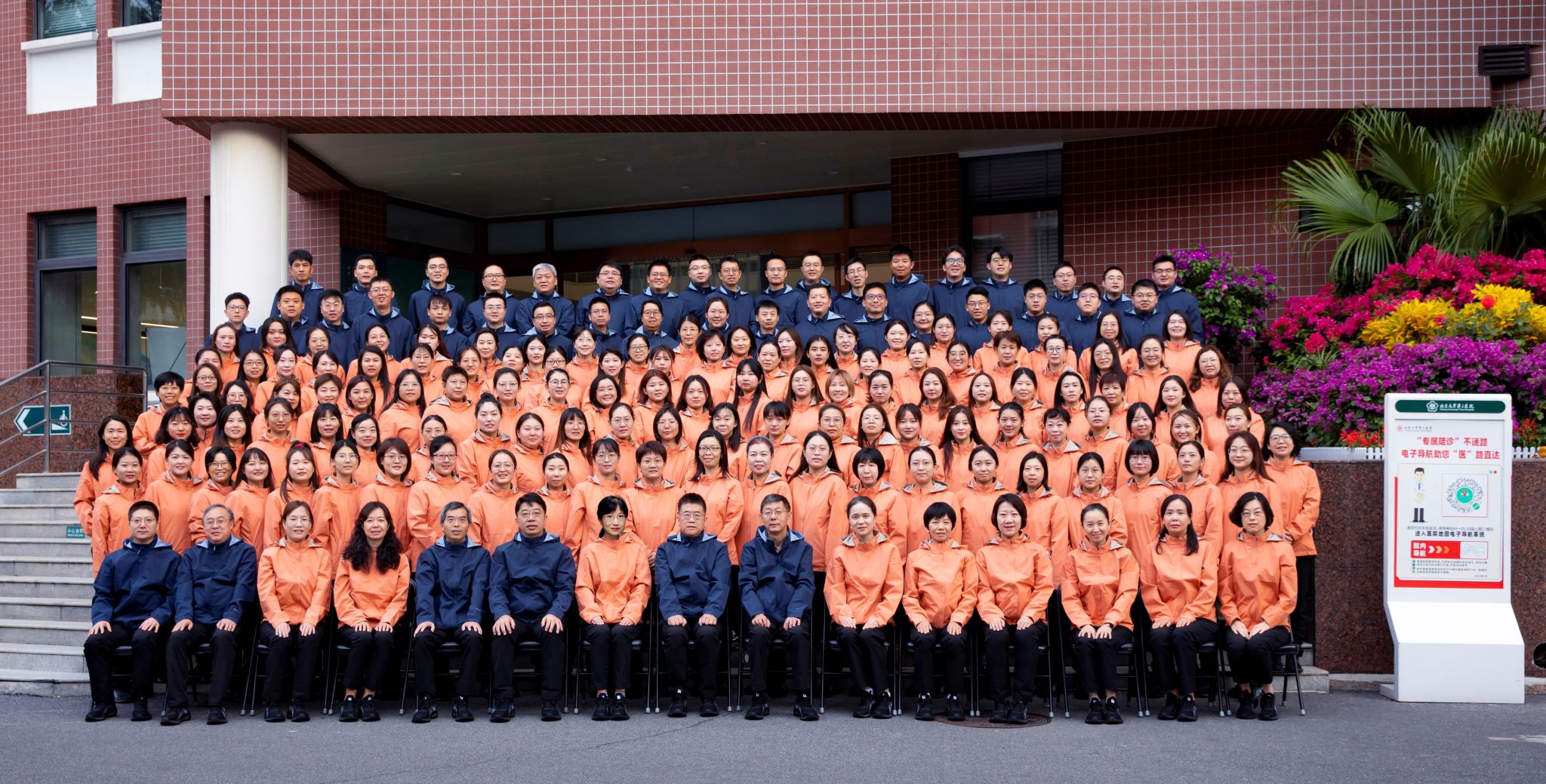
Under the leadership of the Party Branch, the Department of Anesthesiology emphasizes the exemplary and pioneering role of Party members, actively promoting departmental culture development and strengthening team cohesion. The department's labor union has created and organized a rich array of cultural activities, most notably represented by the departmental brass band. Through these activities, a positive departmental atmosphere has been fostered, uniting and motivating all medical staff with professionalism, dedication, and an enterprising spirit. In November 2016, the department was honored with the prestigious title of "Peking University Model Staff Home."
In the context of the new era, the departmental Party Branch and labor union uphold the philosophy that "medical science popularization is a new form of doctor-patient communication," actively organizing and participating in diverse science communication activities. These include the widely media-covered Glaucoma Band, patient support group meetings, science popularization competitions, science outreach programs in schools, establishment of science communication public accounts, and publication of popular science articles. Through these varied formats, anesthesia-related knowledge is vigorously promoted, and a cultural ethos of reverence for life is championed.
Mindful of its sacred mission to "hold aloft the rainbow of life through compassion," the Department of Anesthesiology is committed to building a talent pipeline and diligently implementing management principles of standardization, normalization, specialization, refinement, and informatization. A highly qualified, professional, management-oriented, and distinctive anesthesiology team has been established. The department has earned recognition and acclaim from the hospital across dimensions of quality service, scientific management, and harmonious development,

 العربية