تفاصيل القسم
Department of Neurosurgery, Peking University Third Hospital is a discipline of the "National Key Clinical Specialty Construction Project," a national base for standardized residency training in surgery (neurosurgery direction), one of the first five bases in Beijing for standardized residency training in surgery (neurosurgery direction), and a recipient of the "Peking University Clinical Scientist Program" and the highest award in neurosurgery—the "Wang Zhongcheng Medical Achievement Award."
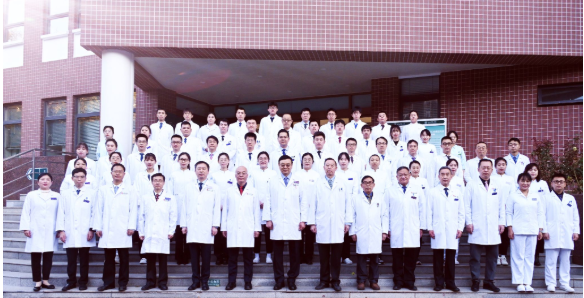
The Department of Neurosurgery at Peking University Third Hospital was founded in 1979 by Professor Cai Zhentong, a pioneer of micro-neurosurgery in China and editor-in-chief of the first domestic monograph *Micro-Neurosurgery*. It is one of the earliest institutions in China to perform micro-neurosurgical procedures. Through the efforts of several generations, the department has developed rapidly. In 2018, Professor Yang Jun, a renowned national neurosurgery expert and a student of Academician Wang Zhongcheng, became the discipline leader. Through innovative planning and support from university and hospital leadership, Professor Yang Jun was awarded the "Peking University Clinical Scientist" title and the highest neurosurgery honor, the "Wang Zhongcheng Medical Achievement Award." The department was designated by Peking University as a "Key Development Discipline" with sustained priority support, received the "National Key Clinical Specialty Construction Project," and, under the guidance of the Beijing Medical Association's innovation and development goals, established the nation's first "Intelligent Neurosurgery Technology Group," becoming a first-class discipline leading innovative development in neurosurgery at Peking University and nationwide. In 2018, the department took the lead in establishing the Peking University Health Science Center Department of Neurosurgery and served as its first chair unit. In 2019, it established the Peking University Health Science Center Precision Neurosurgery and Tumor Research Center, and in the same year was approved as one of the first five bases in Beijing for standardized residency training in surgery (neurosurgery direction). In 2020, it became a national base for standardized residency training in surgery (neurosurgery direction), and in 2022, the department was awarded the "National Key Clinical Specialty Construction Project." Since 2018, it has successively undertaken major strategic development plans, including the National Natural Science Foundation, the National Brain Science Plan, the Beijing Brain Plan, the Beijing High-Precision Discipline Construction, and the Peking University Clinical Scientist Program. Under the leadership of Professor Yang Jun, the Department of Neurosurgery at Peking University Third Hospital is entering a phase of comprehensive and rapid development. Currently, the department boasts a strong and distinguished team of academic leaders and a well-established talent pipeline. It is a doctoral and master's degree conferral site for Peking University Surgery (Neurosurgery), a postdoctoral research station, with 5 doctoral supervisors (including 3 postdoctoral supervisors) and 10 master's supervisors. The department has a rational talent structure, providing a solid foundation and potential for sustainable development. It operates four management units—physician group, nursing group, technical group, and laboratory—working in coordinated and close collaboration to achieve systematic, refined, and standardized management. The main campus has 102 open beds, with collaborative development alongside the Cerebrovascular Center and related departments, performing approximately 2,800 neurosurgical procedures annually. Additionally, the Chongli, Yanqing, Haidian, Yan'an, and Qinhuangdao campuses provide a coordinated group of 150 beds for further development. The department has established workstations in over 30 hospitals nationwide, conducting teleconsultations, medical referrals, and work guidance, with nationwide reach.
The department is equipped with first-class advanced facilities, particularly in the perioperative full-process management of informatization and precise minimally invasive care (including multimodal imaging digital technology, intelligent diagnosis, and pre-pathology advancement). Leveraging the advantages of the Xueyuan Road Innovation Alliance (including Peking University, Tsinghua University, the Chinese Academy of Sciences, and other top domestic research institutions), it promotes the integration of medicine and engineering, achieving outstanding innovative results. It currently possesses the most advanced Zeiss and Leica microscopes, Huake Precision neurosurgical 3D structured-light surgical robots, minimally invasive surgical intelligent platforms, the most advanced Brainlab neuronavigation systems, power systems, neuroendoscopes, stereotactic devices, mobile C-arms, and other surgical equipment, as well as auxiliary devices such as intracranial pressure monitors, neurosurgery-specific ventilators, neuroelectrophysiological monitoring systems, cerebral oximetry monitors, intraoperative ultrasound, and 3D reconstruction imaging post-processing systems. The performance and advancement of this equipment are domestically leading.
Currently, the Department of Neurosurgery has developed three signature technologies and five major specialty groups. The three signature technologies include: intelligent diagnosis and treatment technology for brain tumors and skull base diseases, cervical-vertebral artery surgical technology, and spinal cord and spinal column surgical technology. The five major specialty groups (10 subspecialties) include: brain tumors, skull base diseases, cerebrovascular diseases, spinal cord and spinal column, traumatic brain injury, neurocritical care, functional neurosurgery, neurointervention, neuroendoscopy, and neuromodulation. The Brain Tumor and Skull Base Group is a nationally leading discipline. In collaboration with the hospital's national key clinical specialties—ophthalmology, otolaryngology, and stomatology—it conducts diagnosis and treatment of complex and difficult brain tumors and skull base diseases referred from across the country, carrying out numerous innovative and pioneering efforts characterized by intelligent neurosurgical technology. Both in volume and quality, it maintains a domestically leading level. The group performs surgeries for complex, recurrent brain tumors and skull base tumors, such as cranio-orbital and cranio-cervical communicating tumor resections, brainstem tumor resections, petroclival tumor resections, cavernous sinus tumor resections, and eloquent area tumor resections, with an annual surgical volume of approximately 600 cases. It has received the First Prize in the Beijing Medical Association "Capital Medical Innovation and Transformation Competition," the Second Prize in the 7th Beijing Medical Science and Technology Award, and 11 other provincial and ministerial science and technology awards. It leads 6 ongoing National Natural Science Foundation projects, leads or participates in over 50 projects at various levels, has published over 60 SCI-indexed papers and over 160 papers in core Chinese journals, contributed to 11 guidelines, and published nearly 20 monographs. In the past 3 years, it has supervised 2 postdoctoral fellows and 9 doctoral graduates. It is invited to participate in over 400 major consultations for difficult and critical cases among tertiary hospitals annually.
The Cerebrovascular Disease Group is a nationally leading discipline in neurointervention and surgical treatment of carotid artery stenosis (CEA). Its work comprehensively covers hemorrhagic cerebrovascular diseases (e.g., aneurysms, cerebral and spinal vascular malformations) and ischemic cerebrovascular diseases (e.g., carotid artery stenosis, moyamoya disease, carotid body tumors), fully implementing open, interventional, and hybrid procedures for cerebrovascular diseases. It has performed numerous innovative efforts, such as the first domestic case of cross-midline carotid-subclavian bypass for common carotid artery occlusion, carotid endarterectomy with simultaneous stent removal and artificial vascular graft for post-gunshot carotid in-stent restenosis, simultaneous carotid endarterectomy combined with off-pump coronary artery bypass grafting for severe carotid stenosis with severe coronary stenosis, and resection of giant carotid body tumors invading the skull base and protruding into the pharyngeal cavity, all achieving domestically leading levels. In collaboration with other related departments, it has established a Cerebrovascular Disease Diagnosis and Treatment Center, awarded the "Five-Star Advanced Stroke Center" by the National Stroke Prevention Committee (only two in Beijing), and has ranked first nationally in CEA surgical volume among advanced stroke centers for six consecutive years, with an annual neurosurgical procedure volume of approximately 1,300 cases.
The Spinal Cord and Spinal Column Group is a traditionally strong discipline of the Department of Neurosurgery at Peking University Third Hospital. It serves as the chair unit of the Spinal Cord and Spinal Column Group of the Chinese Medical Association and is one of the national training bases for spinal cord and spinal column surgery under the Chinese Medical Association Neurosurgery Branch. The group's work includes: resection of spinal cord tumors (including intramedullary, intradural extramedullary, and extradural locations; covering astrocytomas, ependymomas, hemangioblastomas, schwannomas, meningiomas, teratomas, dermoid cysts, epidermoid cysts, enterogenous cysts, spinal dural cysts, sacral canal cysts, and tumor-like lesions), paravertebral tumor resection, spinal cord untethering, Chiari malformation decompression, and meningomyelocele repair. It pioneered hemilaminectomy, laminoplasty with reattachment, micro-channel-assisted spinal cord tumor resection, and neuroendoscope-assisted spinal cord tumor resection in China, with an average annual surgical volume of approximately 500 cases, maintaining a leading domestic position.
The Functional Neurosurgery Group performs procedures including: peripheral branch destruction, radiofrequency ablation, balloon compression of the trigeminal ganglion, microvascular decompression of the trigeminal nerve, trigeminal nerve root combing, and partial sensory root sectioning for trigeminal neuralgia, as well as dorsal root entry zone sectioning and electrical stimulation implantation for chronic pain in the trunk and limbs. The group possesses 2 world-leading neurosurgical robots and was the first in China to perform robot-guided precise balloon compression of the trigeminal ganglion. It routinely conducts surgical treatment for dystonia disorders, including deep brain stimulation electrode implantation for Parkinson's disease, microvascular decompression for hemifacial spasm, and partial posterior root sectioning for limb dystonia, with an

 العربية