تفاصيل القسم
The Department of Orthopedics at Peking University Third Hospital (abbreviated as PUTH Orthopedics) was founded in 1958. Under the leadership of five successive department chairs—Professor Yang Keqin, Professor Zhang Zhihu, Professor Dang Gengting, Professor Liu Zhongjun, and Professor Li Weishi—it has grown into a national key discipline with leading academic standing in China and considerable international influence. In 2007, it was awarded the title of "Innovation Team" by the Ministry of Education, and in 2019, it was approved to establish the Ministry of Education Engineering Research Center for "Precision Medicine of Bone and Joint." In 2021, it ranked third in orthopedic surgery in the five-year total science and technology value (ASTEM) ranking released by the Chinese Academy of Medical Sciences.
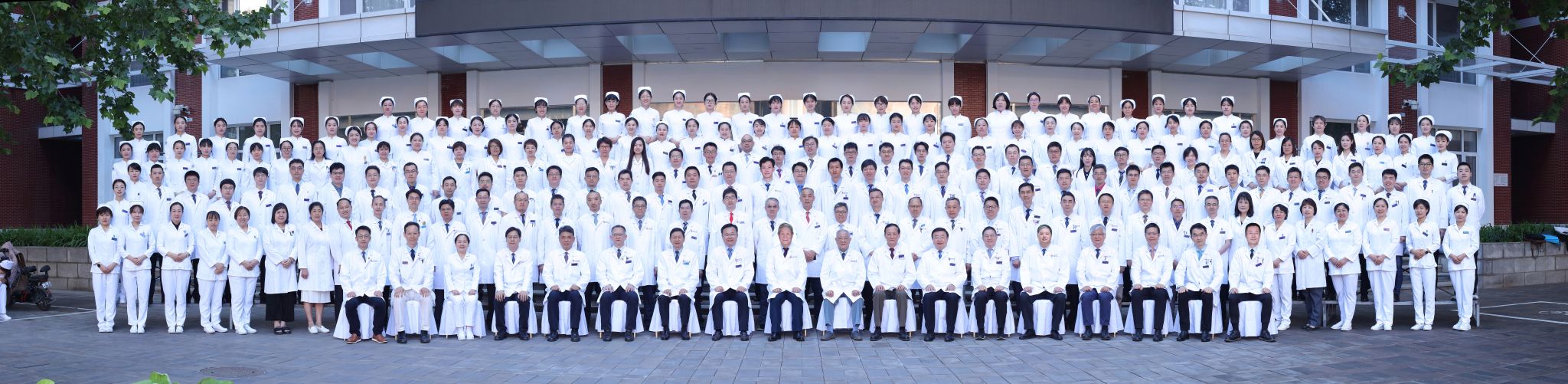
Reviewing the development history of PUTH Orthopedics, generations of orthopedic professionals have strived with dedication and enterprise. Currently, the department comprises 8 wards with a total of 272 beds, maintaining a bed utilization rate above 95%. It has 75 specialized physicians, including 32 chief physicians, 16 associate chief physicians, 17 doctoral supervisors, 15 master's supervisors, 5 with postdoctoral research experience, and over 80% of physicians holding doctoral degrees. In 2022, while actively conducting epidemic prevention and control, the department performed over 14,000 surgical procedures annually, handled 200,000 outpatient and emergency visits, achieved a Case Mix Index (CMI) of 2.20, and maintained an average hospital stay of 5.67 days across the department, reaching internationally leading levels in medical efficiency, patient safety, and case complexity.
In the late 1950s, the first department chair, Professor Yang Keqin, led the department to pioneer surgical treatment for cervical spondylosis and lumbar disc herniation in China. In the early 1960s, the department completed the country's first anterior cervical discectomy and interbody fusion under acupuncture anesthesia. By the 1970s, clinical diagnosis, treatment, and related research on osteoarthritis and cervical spondylosis continued to deepen. In 1972, the first total vertebrectomy for lumbar giant cell tumor of bone was performed, and in 1975, the first monograph on *Cervical Spondylosis* in the new China was published.
In the 1980s, under the leadership of the second department chair, Professor Zhang Zhihu, the department continued in-depth research across all orthopedic fields while aligning with international standards. It introduced artificial joint replacement surgery and conducted multiple independent developments of artificial hip prostheses, establishing itself as one of the few early centers in China to undertake such work. In 1985, Professor Zhang Zhihu performed the country's first posterior cervical double-door laminoplasty. In 1986, Professor Cai Qinlin completed the first posterior cervical single-door laminoplasty in China. During the same period, PUTH Orthopedics was the first in China to systematically characterize the clinical features of foraminal and extraforaminal lumbar disc herniation, and pioneered the trans-isthmus lateral approach for nucleotomy to treat this condition.
In the 1990s, PUTH Orthopedics accelerated the pace of discipline development. The third department chair, Professor Dang Gengting, took the lead in dividing the department into six specialized groups—cervical spine, lumbar spine, spine, joints, trauma, and craniovertebral junction—to conduct in-depth diagnosis, treatment, and research, further expanding the discipline's scope. In 1992, PUTH Orthopedics performed unicompartmental knee arthroplasty and patellofemoral arthroplasty using independently developed prostheses. From 1999 to 2003, research on the pathogenesis of osteoarthritis and stem cell therapy received consecutive funding from the National Natural Science Foundation of China, with findings earning the "Second Prize of the Chinese Medical Association Science and Technology Award" and the "Third Prize of the Beijing Science and Technology Progress Award."
Entering the 21st century, the department's academic echelon and strength became even more robust. The fourth department chair, Professor Liu Zhongjun, led the department forward with determination, using specialized group development to define disciplinary goals and laying a solid foundation for clinical practice and research at PUTH Orthopedics. In 2018, the orthopedic team completed a generational transition, with Professor Li Weishi assuming the role of the fifth department chair. In response to new circumstances, Professor Li comprehensively advanced discipline construction, and aligned with the hospital's high-quality development needs, reorganized the original six specialized groups into three subspecialties—spine, joints, and trauma. In 2021, a spinal deformity specialized group was established, jointly supporting the comprehensive development of the spine subspecialty alongside the craniovertebral, cervical spine, lumbar spine, and general spine groups.
Currently, PUTH Orthopedics is experiencing rapid development in the diagnosis, treatment, and research of conditions including spinal degeneration, spinal tumors, spinal deformities, spinal and extremity trauma, age-related osteoarthritis, and articular cartilage and ligament injuries. In 2002, the "Diagnosis and Treatment of Cervical Spondylosis" study won the Second Prize of the National Science and Technology Progress Award, and in 2003, the "Clinical Study of Cervical Spinal Cord Injury Without Fracture or Dislocation" won the First Prize of the Ministry of Education Science and Technology Progress Award. Professor Chen Zhongqiang led the lumbar spine group in in-depth research on the key diagnosis and surgical treatment of severe thoracolumbar kyphosis and thoracic spinal stenosis, making significant contributions and earning the Beijing Municipal Science and Technology Commission's Capital Ten Major Diseases Science and Technology Program (Innovative Science and Technology Achievement Award) and the Second Prize of the Beijing Science and Technology Award. In 2005, Professor Liu Xiaoguang pioneered the "culvert collapse method" for 360-degree circumferential decompression of the thoracic spinal cord. Professor Wang Chao led the craniovertebral group in completing over 4,000 atlantoaxial surgeries, making PUTH Orthopedics the world's largest diagnosis and treatment center for atlantoaxial disorders. Professor Sun Yu led the cervical spine group in achieving substantial results in posterior cervical surgical technique refinement, long-term follow-up observation of cervical artificial disc replacement, and surgical treatment of severe cervical deformities. In 2014, Professor Liu Zhongjun completed the world's first use of a 3D-printed artificial customized axis for treating spinal tumors, and the developed 3D-printed product obtained CFDA registration certification, significantly advancing the clinical application of 3D-printed orthopedic products in China.
In recent years, Professor Li Weishi proposed the concept of biomechanically adapted interbody fusion cages, developed the world's first 3D-printed bone-trabecula-like biomechanically adapted lumbar interbody fusion cage, and applied it clinically as a pioneer. Professor Li also proposed fitting relationships for spinopelvic sagittal parameters in the Chinese population and personalized treatment strategies, providing an important basis for reconstructing overall sagittal balance of the trunk in Chinese individuals. Additionally, he proposed a diagnostic standard for osteoporosis in the Chinese population based on lumbar vertebral CT values, identified the significant value of vertebral CT values in assessing fragility vertebral fracture risk, and internationally first proposed a severity classification for osteoporosis based on vertebral CT values. Meanwhile, he led a multidisciplinary team in developing the world's first autonomous spinal lamina recognition and cutting robotic system. In 2018, the project "Development and Promotion of a Domestic Unicompartmental Knee Replacement System" developed by Professor Tian Hua's team won the Second Prize nationally in the First China Medical Transformation Innovation and Entrepreneurship Competition. The Visual Treatment Solution (VTS), a visual intelligent assistance system developed under the leadership of Professor Tian Hua's team, was approved for market release by the National Medical Products Administration as the first domestically produced visual intelligent assistance system for joint replacement, filling a gap in the industry. In March 2022, the *Operating Specifications for Hip and Knee Arthroplasty (2022 Edition)*, commissioned by the National Health Commission and organized under the leadership of Professor Tian Hua, was officially promulgated and implemented. Professor Zhou Fang's proposed new classification of hip fractures and related research findings provide guidance for internal fixation selection across fracture types. Professor Tian Yun, addressing the challenge of difficult surgical exposure for scapular fractures, collaborated with Professor Wu Dankai of Jilin University to pioneer, for the first time globally, the concept of an axillary posterior axillary line approach for exposing anterior scapular fractures, which was rapidly promoted nationwide, enabling better treatment outcomes for more patients. Professor Tian Yun innovatively employed 3D-printed microporous titanium alloy prostheses to treat large segmental bone defects of the extremities and led breakthrough work in China in 3D-printed repair of chronic osteomyelitis and TCBridge certification for bone defect treatment.
Over the past five years, PUTH Orthopedics has achieved notable successes in both research and talent development. The department currently undertakes 73 national and provincial/ministerial research projects, including key projects of the Ministry of Science and Technology and the National Natural Science Foundation of China, and has completed 32 such projects. To date, nearly a thousand scientific papers have been published, including 399 SCI-indexed papers in international journals, and over 10 orthopedic monographs have been compiled or edited.
In 2019, Professor Li Weishi led his team in receiving approval to establish the Ministry of Education Engineering Research Center for "Precision Medicine of Bone and Joint," and he serves as the center's director. Professor Li has successively been recognized as a Young and Middle-Aged Science and Technology

 العربية