تفاصيل القسم
The Department of Infectious Diseases at Peking University Third Hospital was established in 2006. Under the leadership of Director Xu Jie, the entire department worked diligently, overcame difficulties, and gradually grew stronger. Initially, the department had 6 physicians, including 2 with doctoral degrees and 2 with associate senior titles, and 12 nurses, including 4 senior nurses. The department comprised a Hepatitis Clinic, Fever Clinic, Intestinal Clinic, and Prevention Clinic, with 3 emergency observation beds, primarily responsible for the diagnosis, treatment, and screening of hepatitis B, hepatitis C, respiratory infectious diseases, and intestinal infectious diseases. During this period, it withstood the test of the 2009 influenza pandemic.
After years of dedicated effort, in 2011, the inpatient ward of the Department of Infectious Diseases was established to admit patients with various infectious and communicable diseases. Since the end of 2019, with the rampant spread of the COVID-19 pandemic, all medical staff of the department united as one, demonstrating resilience and perseverance, successfully withstanding the impact of the pandemic and excellently completing the hospital's infection prevention and control tasks.
In 2022, a new leadership team was established, with Director Lu Ming taking over the baton of the Department of Infectious Diseases to continue leading the team forward. The department upholds a scientific, rigorous, and advanced approach, advancing simultaneously in the three aspects of clinical practice, education, and research.
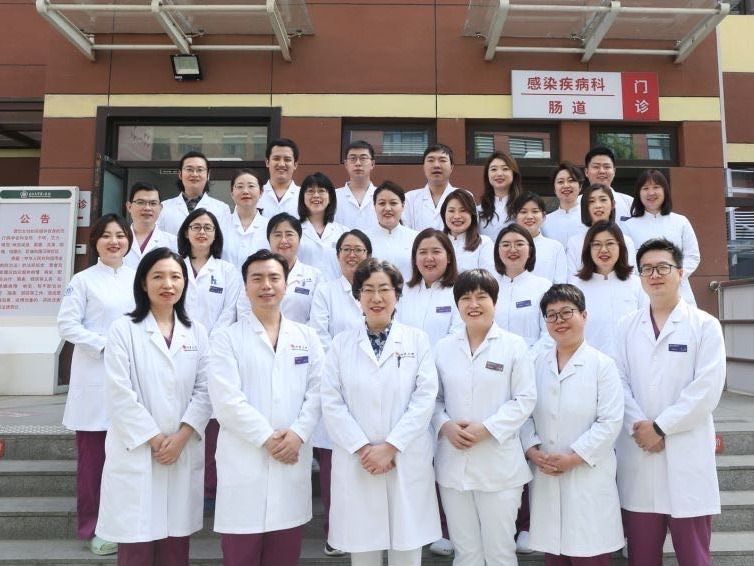
The department currently has 18 physicians, including 14 with doctoral degrees, 2 with master's degrees, 4 with senior professional titles, 2 with associate senior titles, 9 with intermediate titles, and 2 graduate student supervisors. There are 27 nurses, including 11 with bachelor's degrees, 3 nurse supervisors, and 9 senior nurses.
The department currently oversees the Hepatitis Clinic, primarily responsible for the diagnosis and treatment of viral hepatitis, fatty liver disease, alcoholic liver disease, drug-induced liver injury, autoimmune liver disease, and conditions with unexplained abnormal liver function; the Infectious Diseases Clinic, responsible for the diagnosis and treatment of various infectious and communicable diseases as well as anti-infective therapy; the Fever Emergency and Intestinal Emergency, primarily undertaking the screening and treatment of various infectious diseases, equipped with an independent infusion room and resuscitation room; and the Infectious Diseases Ward, which was renovated and upgraded in 2021 to a fully negative-pressure ward with a total of 25 beds, including 1 ICU bed and 1 negative-pressure operating room, capable of independently performing bedside bronchoscopy examinations. The main diagnostic and treatment scope of the ward includes COVID-19, pneumonia in immunocompromised populations, community-acquired pneumonia, central nervous system infections, intra-abdominal infections, soft tissue infections, urinary tract infections, and other infectious and communicable diseases. Additionally, the department has extensive clinical experience in the differential diagnosis of fever of unknown origin and lymphadenopathy of unknown cause.
In terms of education, the Department of Infectious Diseases at Peking University Third Hospital has long served as a standardized residency training base in Beijing and officially became a teaching base for eight-year program graduate students in infectious diseases under Peking University Health Science Center in 2011, undertaking the teaching of bridge courses, clerkships, and large lectures on infectious diseases for Peking University graduate students. The department also undertakes continuing education tasks on infectious diseases for hospital medical staff.
In terms of research, the Department of Infectious Diseases has achieved historic breakthroughs. It currently has 1 associate researcher, associate professor, and graduate student supervisor, has been awarded multiple National Natural Science Foundation of China Youth Fund projects, and has published dozens of high-quality articles in recent years. The number of clinical trial projects undertaken has also grown steadily, with 7 clinical trial projects already undertaken in the first half of 2023 alone.
The current Department of Infectious Diseases, with a younger mindset and stronger momentum, is striving to become a nationally leading center for the diagnosis and treatment of infectious diseases at the earliest possible date.

 العربية